TRICASSE Patrice. La Chiromance de Patrice Tricasse
TRICASSE Patrice. La Chiromance de Patrice Tricasse | Libri antichi e moderni |
TRICASSE Patrice. La Chiromance de Patrice Tricasse
TRICASSE Patrice. La Chiromance de Patrice Tricasse | Libri antichi e moderni |
Metodi di Pagamento
- PayPal
- Carta di Credito
- Bonifico Bancario
- Pubblica amministrazione
- Carta del Docente
Dettagli
Descrizione
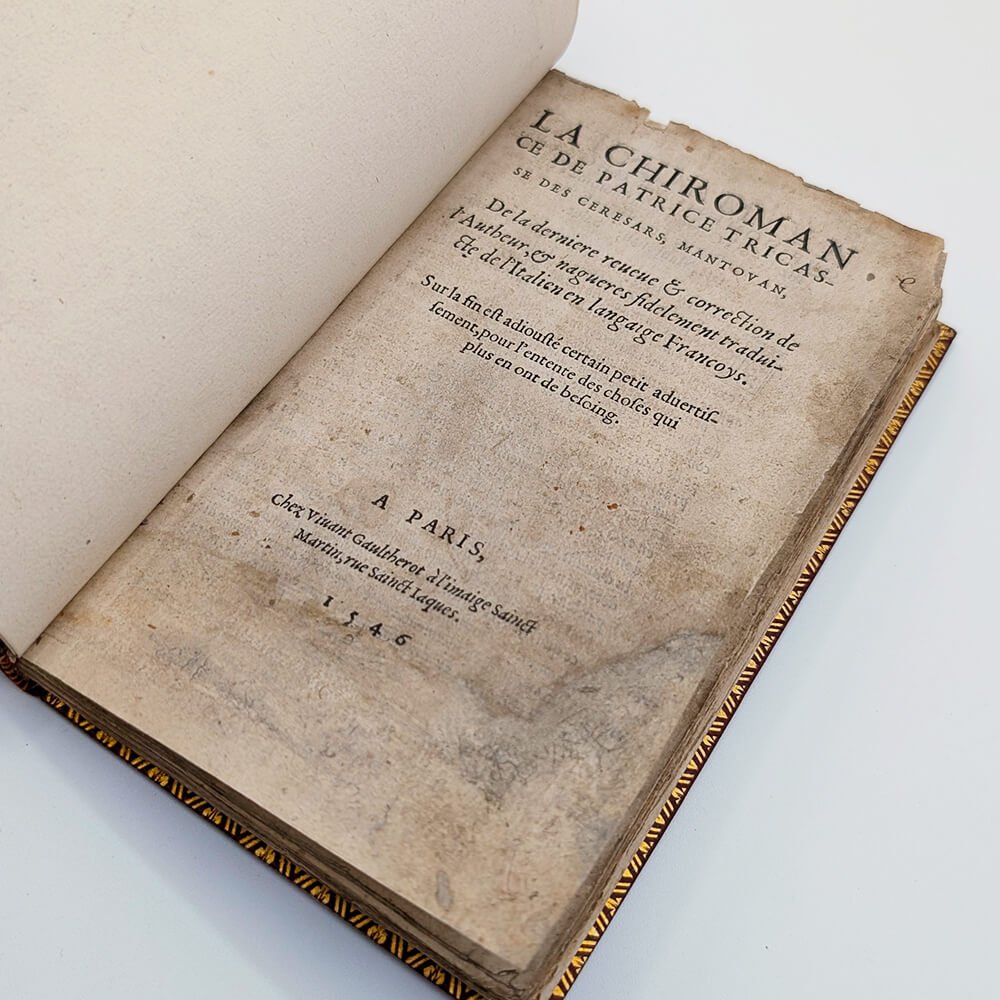
La Chiromance de Patrice Tricasse des Ceresars, Mantovan, de la derniere reveue & correction de l’Auteur & nagueres fidelement traduicte de l’Italien en langaige Francoys.
A Paris, chez Vivuant Gaultherot à l’imaige Sainct Martin, rue Sainct Jaques. 1546.
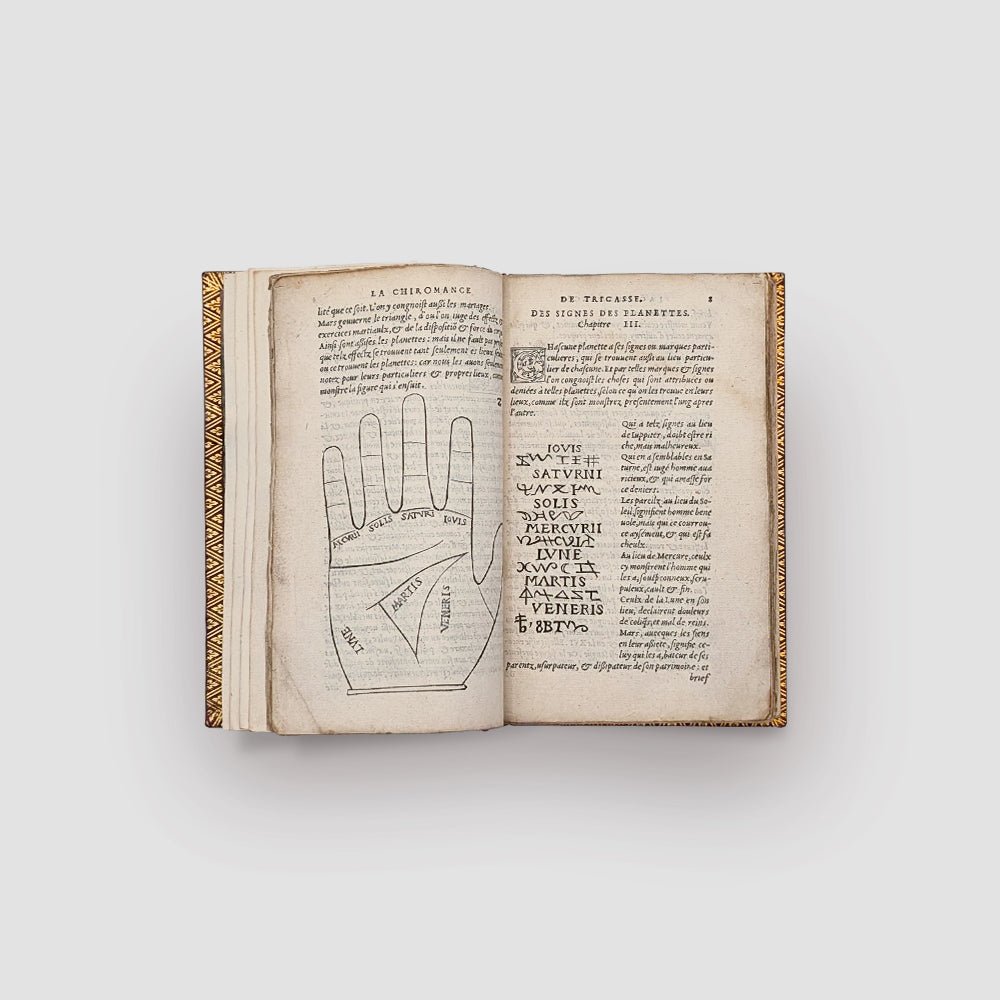
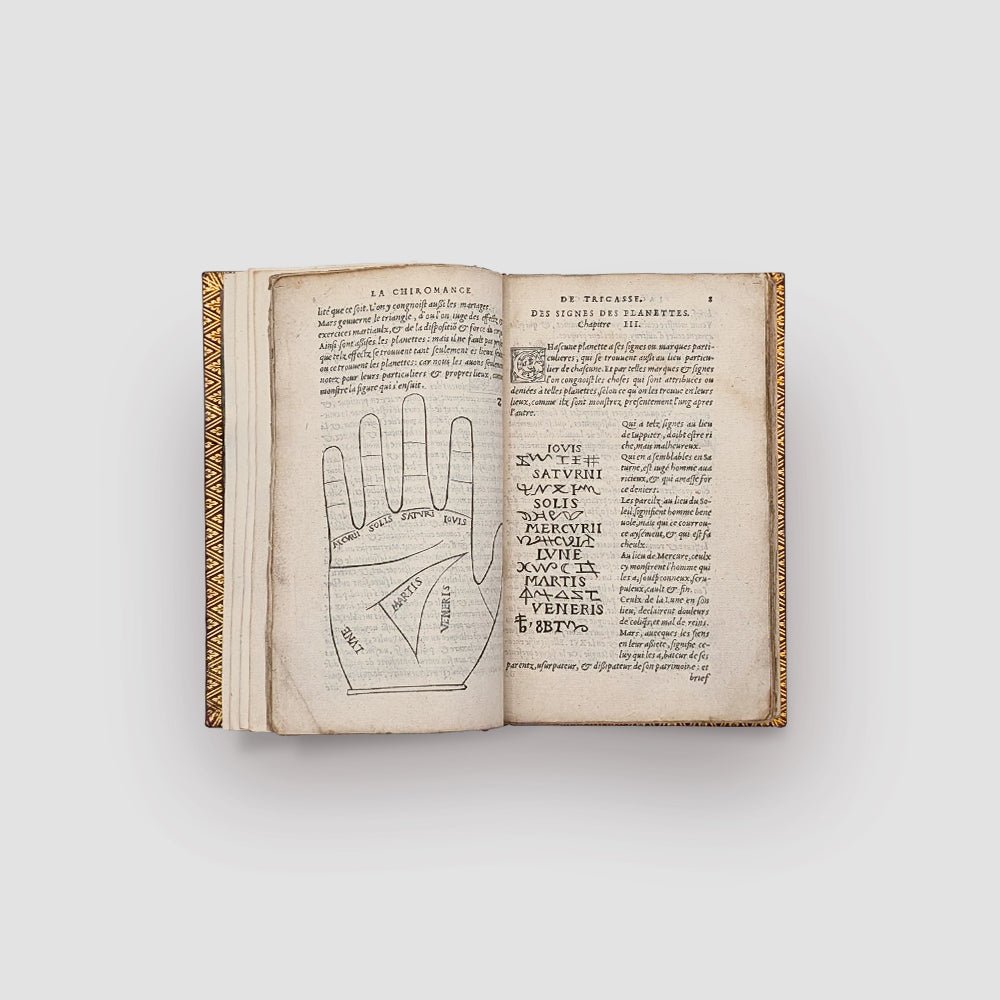
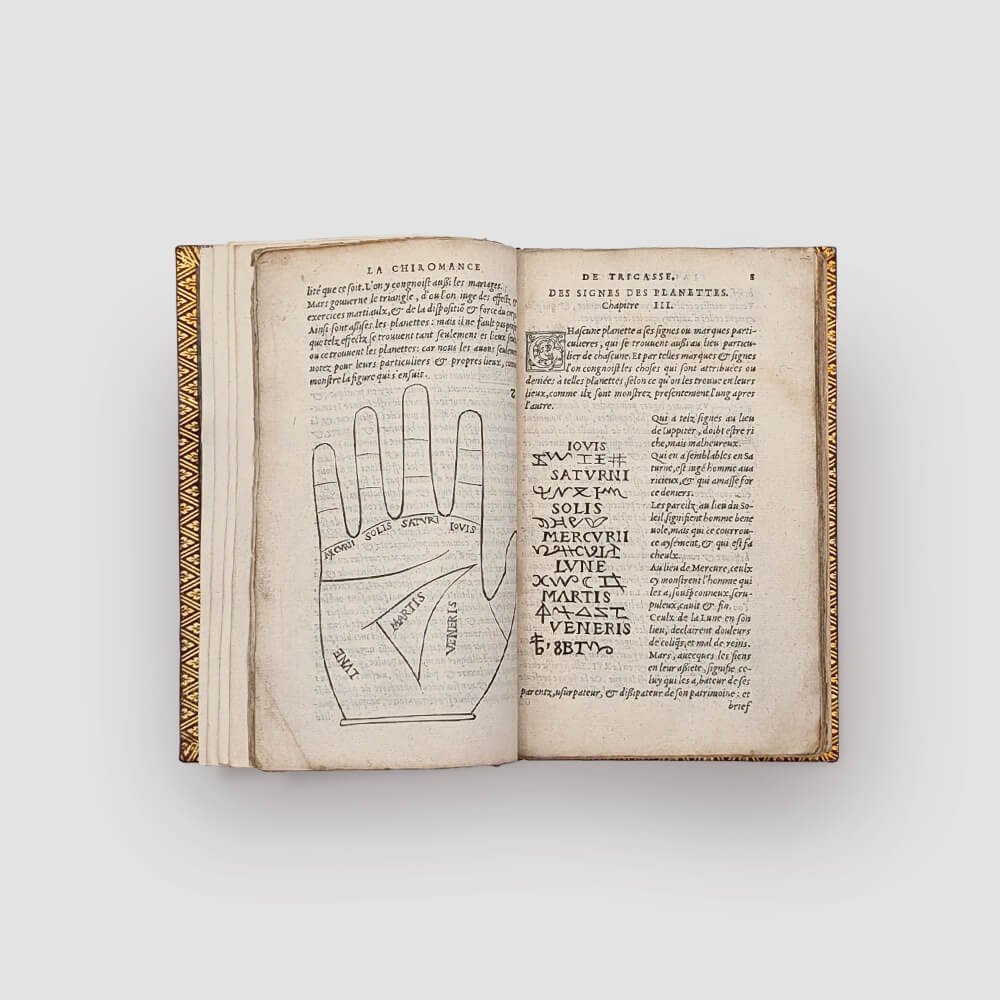
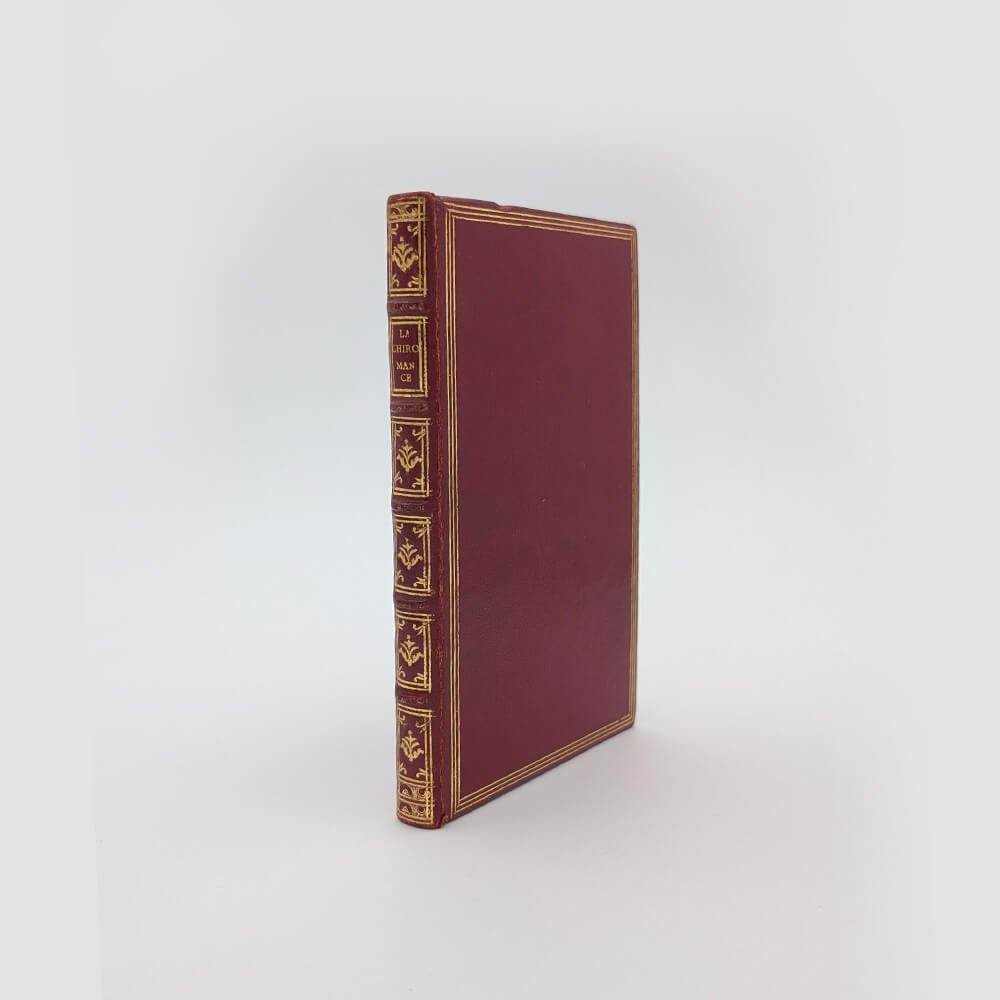
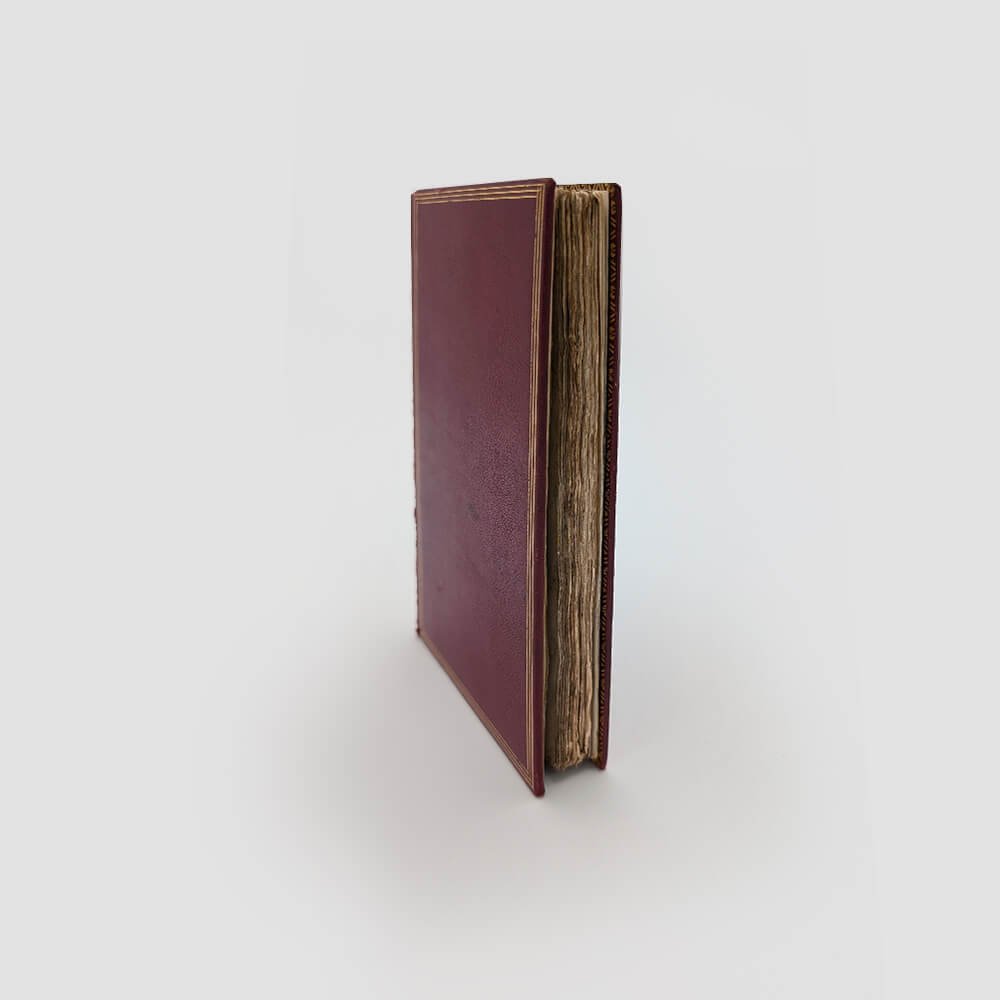
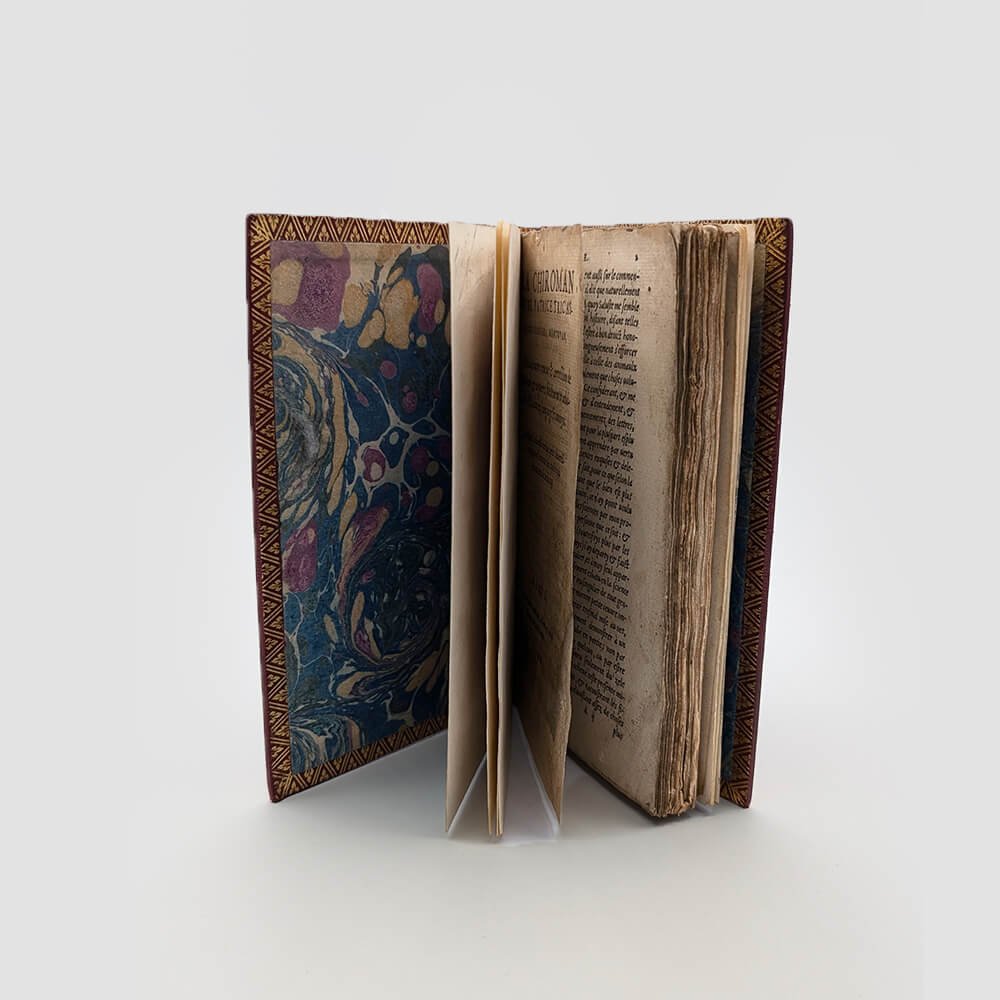
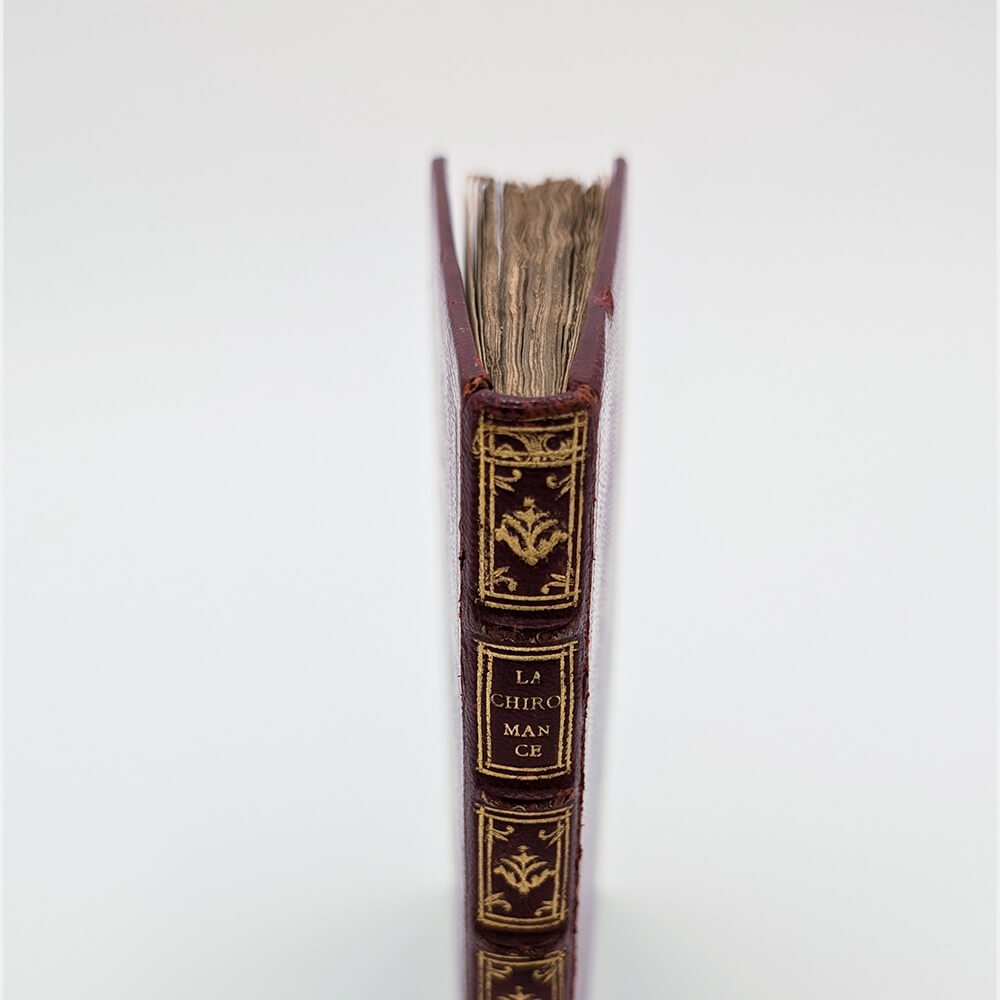
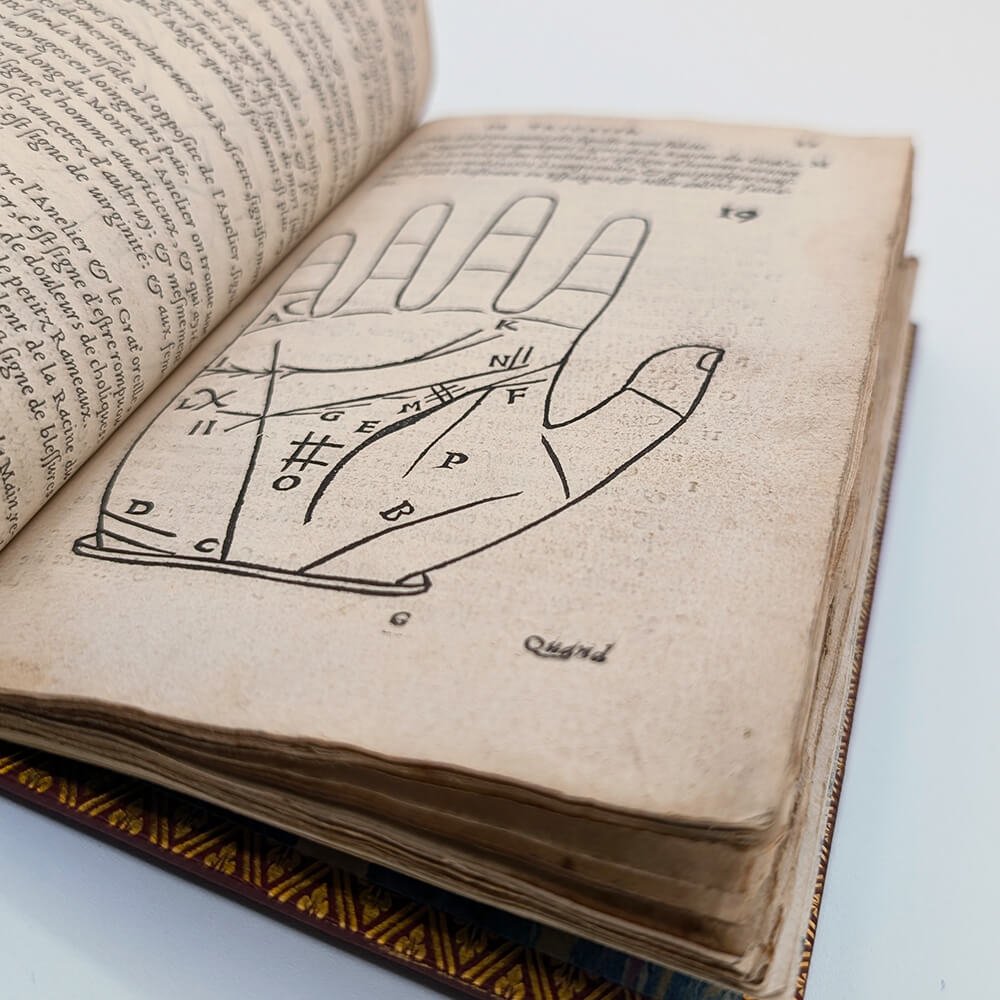
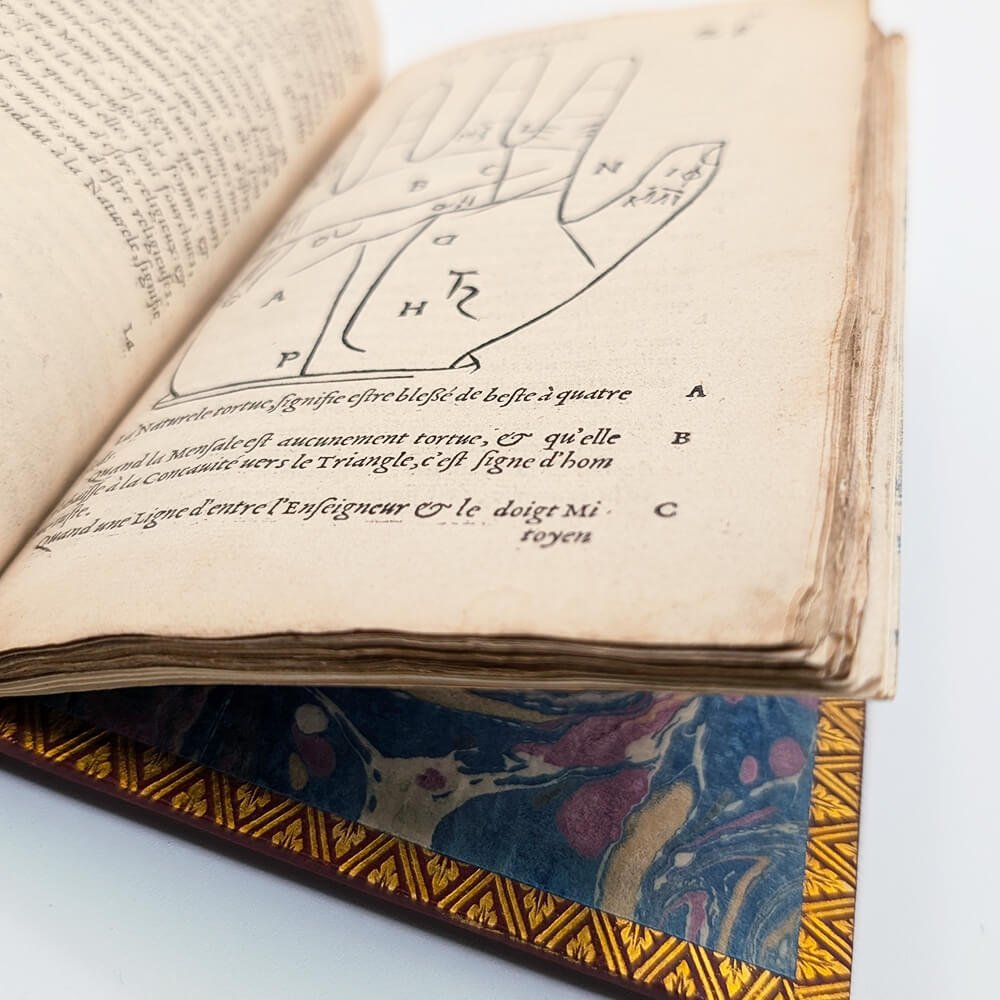
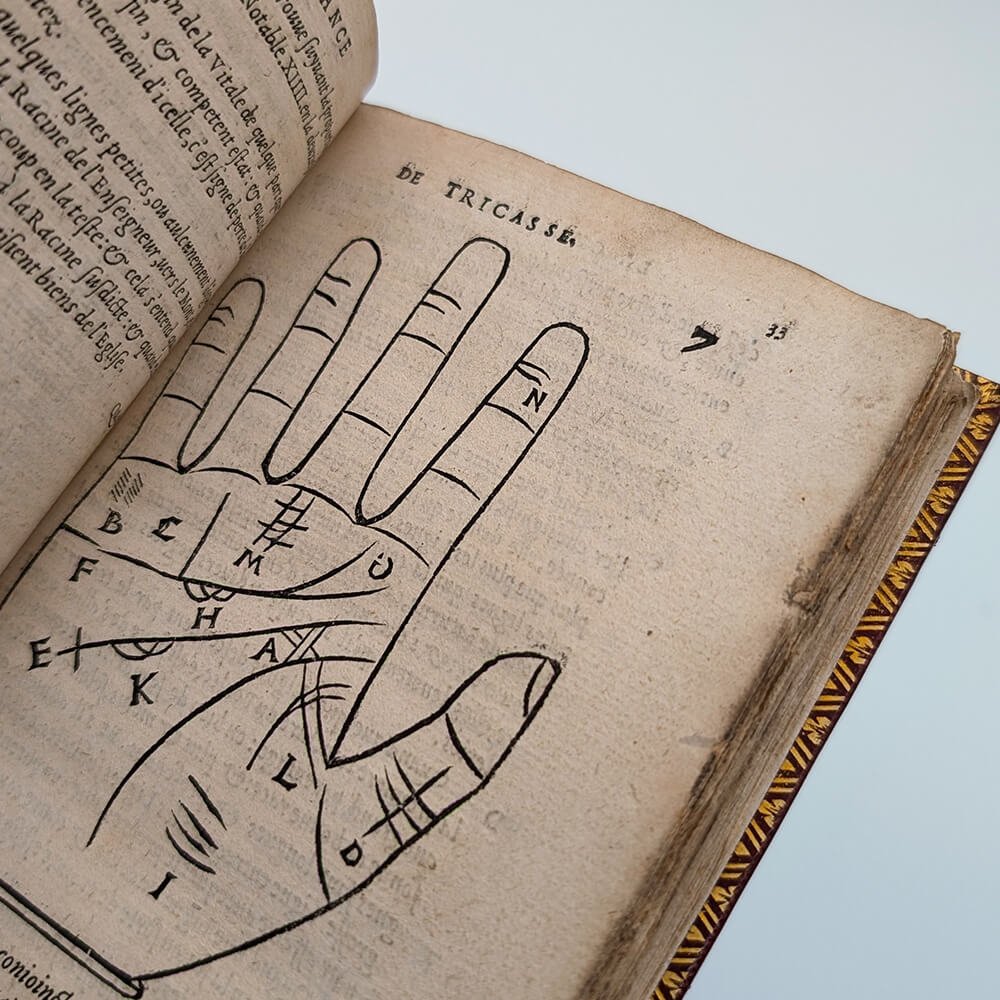
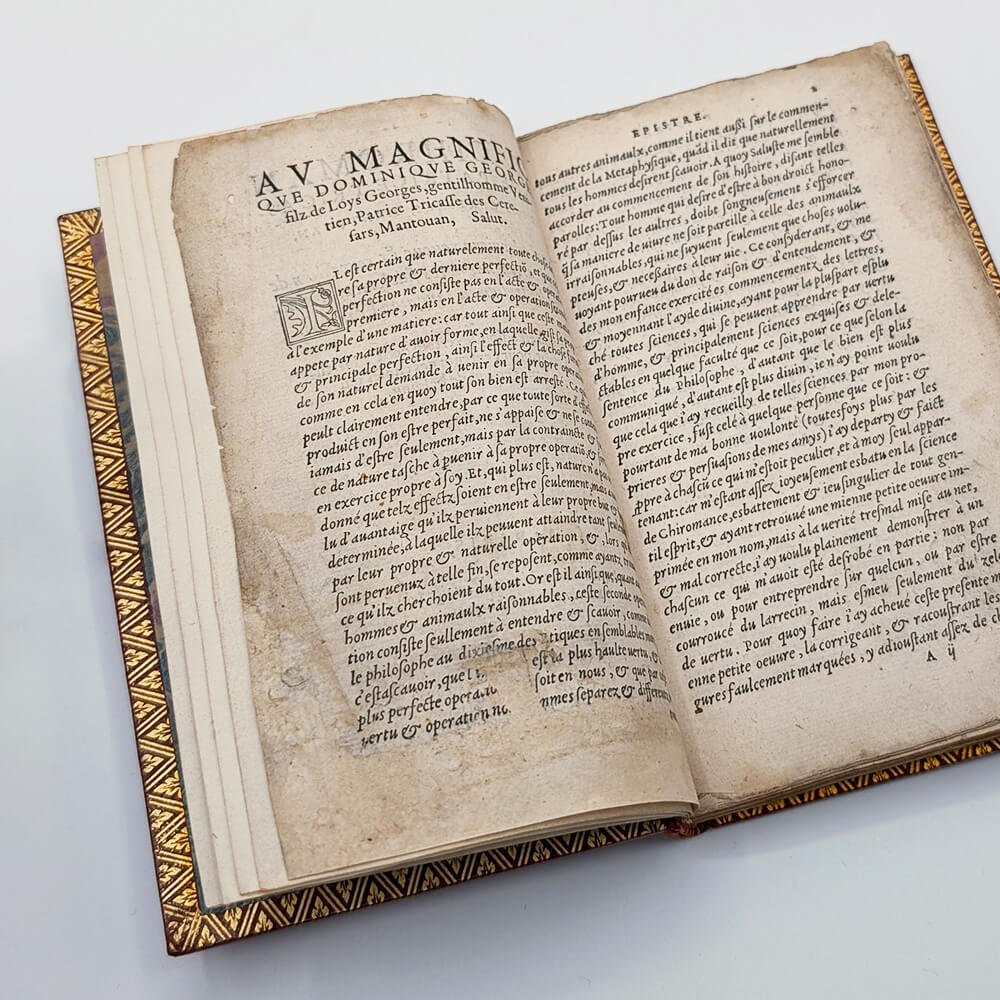
8vo (165 x 105 mm). 19th-century pastiche binding, spine with raised bands and gilt tooling, gilt title, triple gilt fillet bordering the boards. Marbled endpapers. 96 unnumbered leaves, signed A-M8. Complete with the title page, the 49 woodcut hands in the text, the author's conclusion (p. 94), and the appended leaves of the Advertissement.
Rare and precious shared issue by Vivant Gaultherot of the true first French edition of this great classic of Renaissance occult sciences.
Written by the Dominican friar Patrizio Tricasso (a native of Mantua), this treatise overturns medieval superstitions by seeking to rationally link palmistry to planetary astrology. It was a resounding success with the humanist public, but its audacity led to the author being placed on the Index by the Inquisition for his divinatory deviations.
This first French-language edition is illustrated with 49 woodcut vignettes depicting the palms of hands, an indispensable visual aid for the author's physical, psychological, or fatalistic predictions.
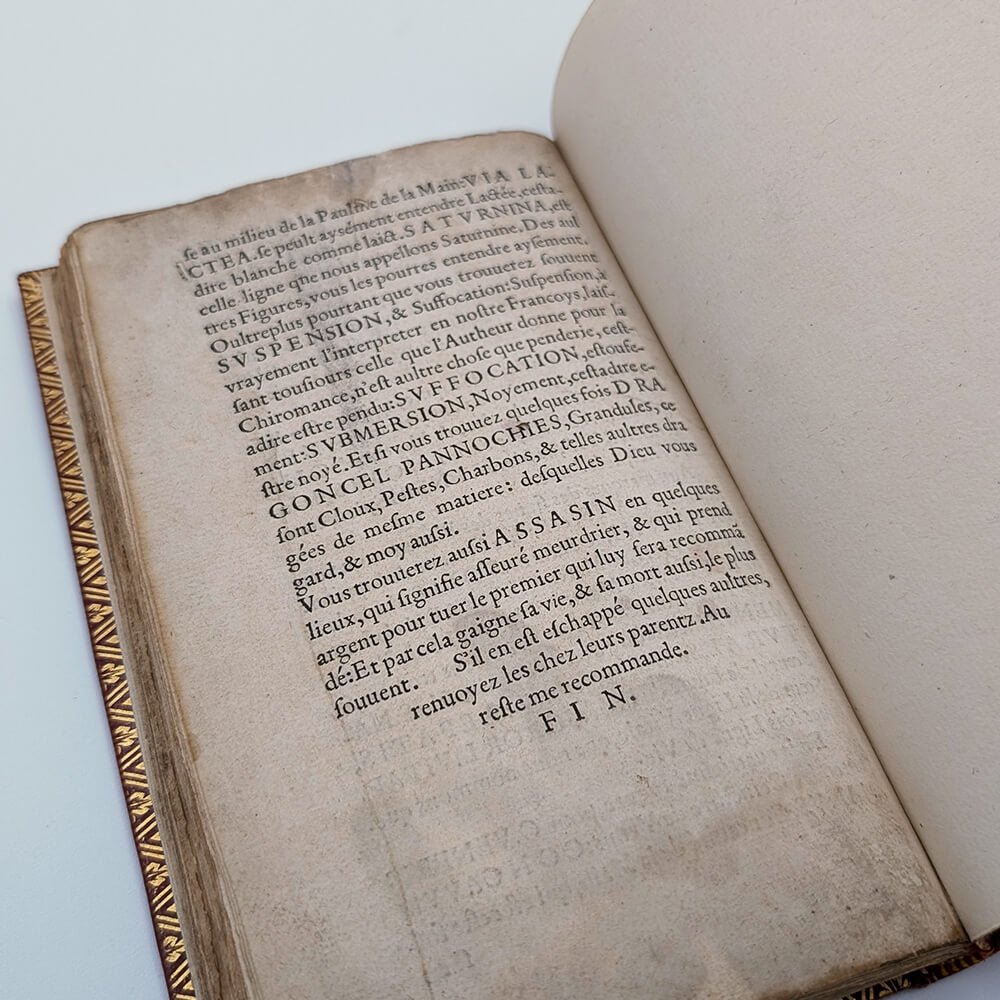
The copy concludes with the highly curious and sought-after "Petit advertissement pour l'entente des choses..." [Short advertisement for the understanding of things...], a precious vernacular glossary where the translator explains the jargon of the time (translating the index finger as "l'enseigneur" [the pointer] or the little finger as the picturesque "grat'oreille" [ear-scratcher]).
Superb copy in 19th-century red morocco, a major testament to the Renaissance's curiosity regarding the secret arts. Title page soiled with old restorations to the lower margin causing a loss of several letters on the verso. Slight old dampstaining and small wormholes on the last three leaves predating the binding, normal foxing and browning for a work of this type. Crisp interior.
Caillet III, 630, does not mention this edition; Brunet V, 945, cites a first French edition from the same year published by Drouart.