Renaissance as Resurrection. Alberti?s Holy Sepulchre in the Context of Quattrocento Florence
Renaissance as Resurrection. Alberti?s Holy Sepulchre in the Context of Quattrocento Florence | Libri antichi e moderni | Timothy Verdon, Giovanni Serafini (Eds)
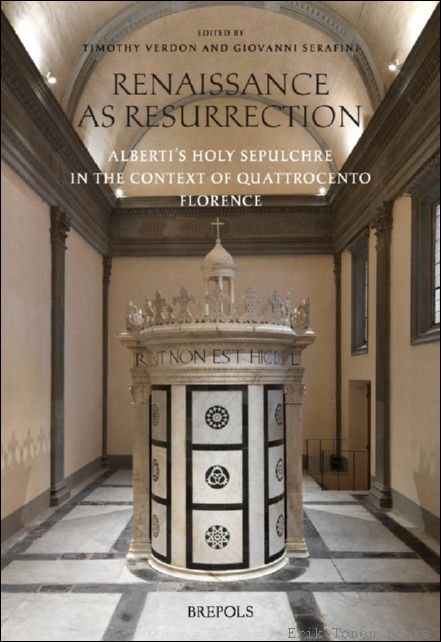
Renaissance as Resurrection. Alberti?s Holy Sepulchre in the Context of Quattrocento Florence
Renaissance as Resurrection. Alberti?s Holy Sepulchre in the Context of Quattrocento Florence | Libri antichi e moderni | Timothy Verdon, Giovanni Serafini (Eds)
Metodi di Pagamento
- PayPal
- Carta di Credito
- Bonifico Bancario
- Pubblica amministrazione
- Carta del Docente
Dettagli
- Autore
- Timothy Verdon, Giovanni Serafini (Eds)
- Editori
- , Brepols, 2026
- Soggetto
- Architectuur, Architecture, Architecture, Architektur
Descrizione
Hardback, Pages: iv + 264, Size:180 x 265 mm, Illustrations:22 b/w, 136 col., Language: English. ISBN 9782503613512. Summary The Italian Renaissance has been studied above all as a cultural phenomenon related to the 15th-century rediscovery of ancient philosophy, literature, and art. The present volume significantly recalibrates that view, looking at the humanist concept of 'rebirth' in relation to the Christian belief in resurrection. Many of the articles deal specifically with the most explicit expression of this ideal equation, Leon Battista Alberti's evocation of Christ's Sepulchre in the Florentine church of San Pancrazio, a masterpiece in which the 'new life' given to classical architecture, becomes a visual metaphor for the Easter event. This association of ideas, operative in numerous other Florentine works, offers modern students a hermeneutical key reflective of 15th-century church history. TABLE OF CONTENTS Foreword, Timothy Verdon Imago mysterii: The Visual Polysemy of Alberti's Holy Sepulchre Introduction Introduction, Timothy Verdon Alberti's Holy Sepulchre in Quattrocento Florence Introduction, Vincenzo Vaccaro The Chapel of the Holy Sepulchre in Florence: Restoration History and Rebirth Part I: The Sepulchre and its Meaning Elena Bastianini, A Virtual Reconstruction of San Pancrazio in Alberti's Time Anke Naujokat, Leon Battista Alberti's Holy Sepulchre Tempietto as a Syncretistic Monument: Religious Readings of its Architecture and Decoration Ettore Rocca, Not Here Yet Nowhere Else But Here. Leon Battista Alberti's Holy Sepulchre in the Light of Nicholas of Cusa Elena Bastianini, Signifying Eternal Renascence: The Marble Inlay of Alberti's Holy Sepulchre Part II: Ecclesial Coordinates Martin Shannon, CJ, Yearn for Everlasting Life: Death and Resurrection in Monastic Spirituality Cristina Acidini, Visual Pilgrimages. Holy Land Sites and Devotional Memory Davide Baldi Bellini, The Council of Florence and the Holy Land Sites in Jerusalem Elena Gurrieri, The Christian Humanist Pilgrim: Marco Rustici's Ideal Journey to the Holy Sepulchre Roberto Gulino, The Sepulchre and the Celebration of Easter: In Florence as in Jerusalem? Part III: Christian Humanist Parallels Gianni Cioli and Agnese Maria Fortuna, The Novelty of Ancient Forms: The Case of Masaccio's 'Trinity' Lorenzo Gnocchi, Cosimo the Elder's 'monumentum apertum' at San Lorenzo Giovanni Serafini, 15th-Century Aedicules, Tabernacles, Sacella. Antiquity Reborn in Contexts of Faith Angelo Pellegrini, Renascence and resurrexio. Alberti's Sepulchre in Renaissance Context Part IV: Contemporary Responses Timothy Verdon, Fons Vitae. Works by Peter Brandes, Maialisa Engelhardt, Susan Kanaga, Filippo Rossi Plates