Principii di economia pura
Principii di economia pura | Libri antichi e moderni | PANTALEONI, Maffeo (1857-1924)
Principii di economia pura
Principii di economia pura | Libri antichi e moderni | PANTALEONI, Maffeo (1857-1924)
Metodi di Pagamento
- PayPal
- Carta di Credito
- Bonifico Bancario
- Pubblica amministrazione
- Carta del Docente
Dettagli
- Anno di pubblicazione
- 1889
- Luogo di stampa
- Firenze
- Autore
- PANTALEONI, Maffeo (1857-1924)
- Editori
- G. Barbèra
- Soggetto
- Ottocento e Novecento
- Stato di conservazione
- Buono
- Lingue
- Italiano
- Legatura
- Rilegato
- Condizioni
- Usato
Descrizione
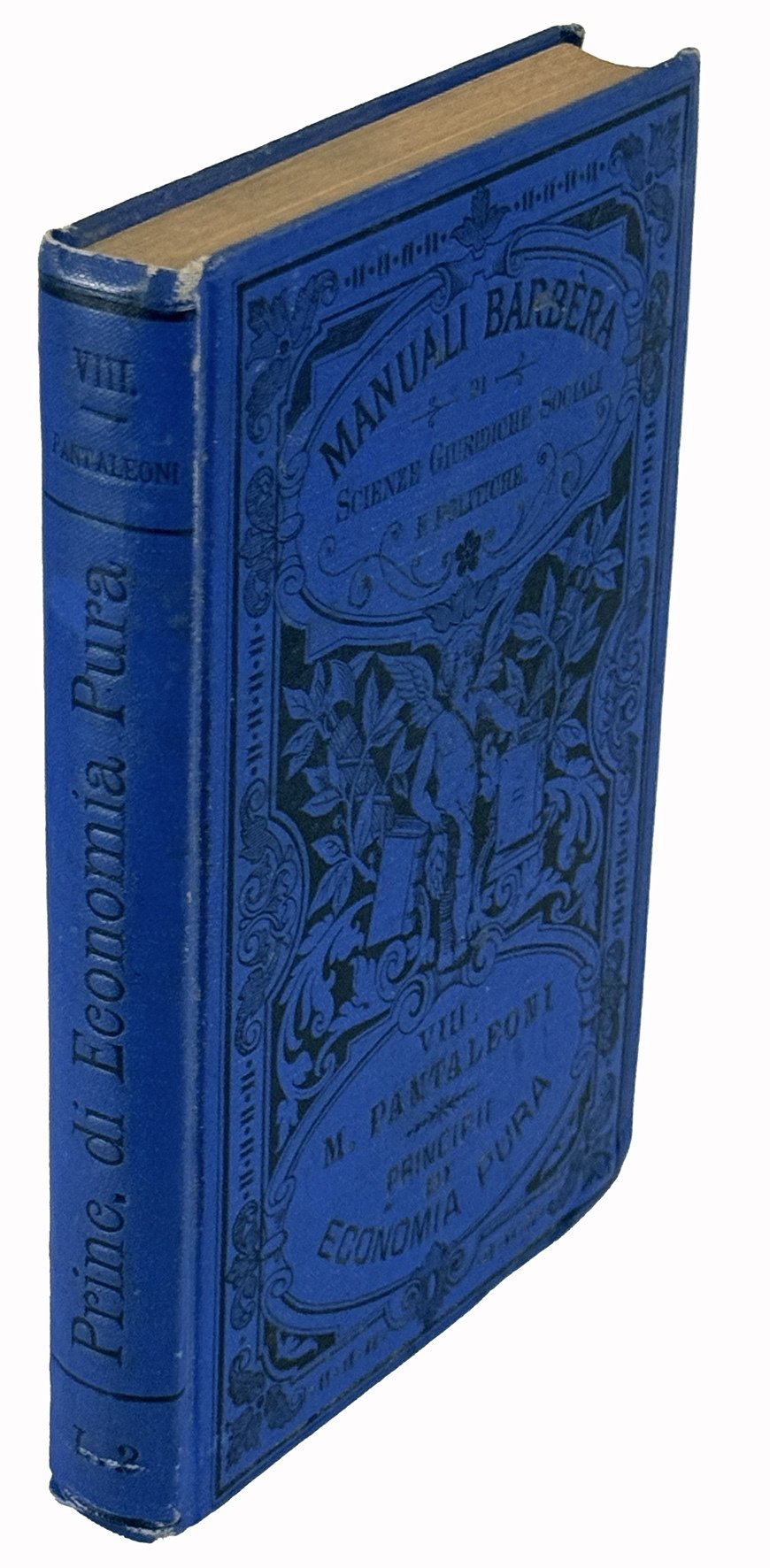
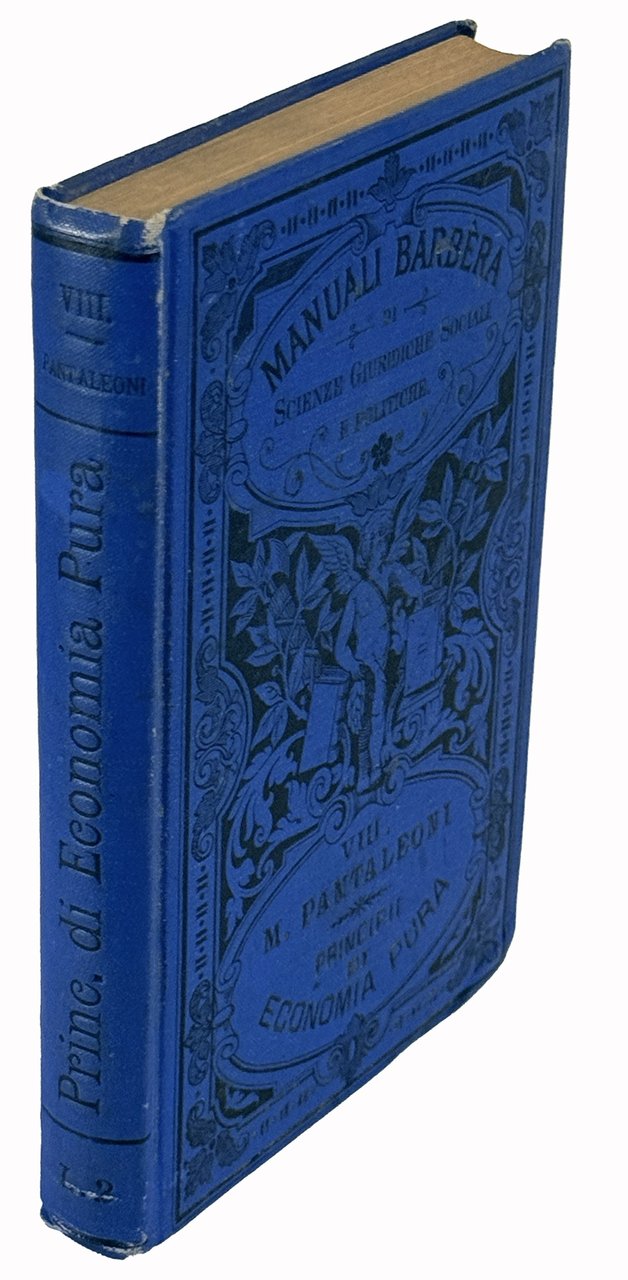
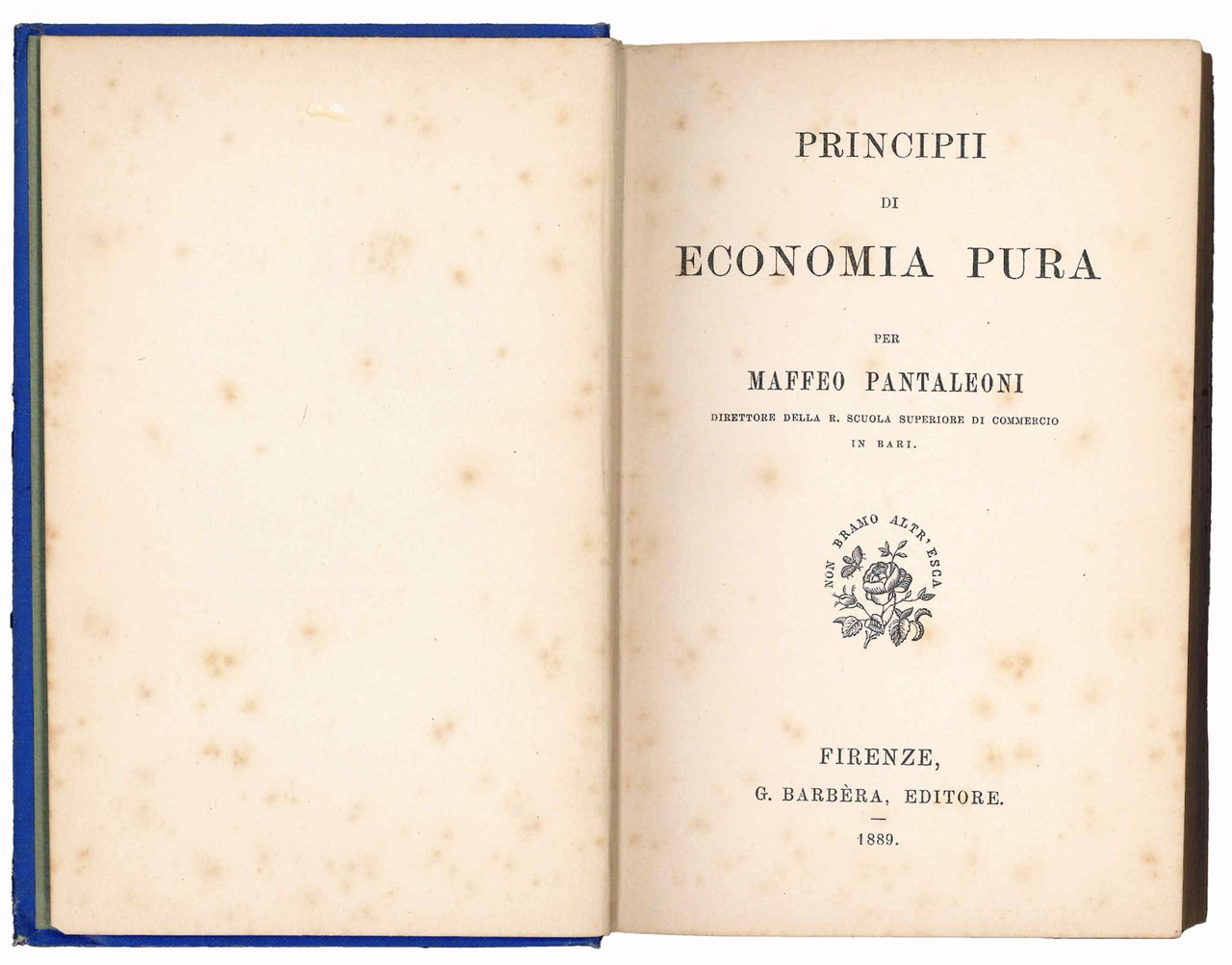
8vo (163x108 mm). 376 pp. Original blue cloth, spine lettered in black, front cover blocked in black, blue-green printed endpapers. Number VIII of the series “Manuali Barbèra”. Paper browned as usual, but a very good copy.
First edition of one of Maffeo Pantaleoni's major works. ‘Pure Economics' “is a classic of the Mathematical School, and contains besides much new matter of the author's, some previously unpublished work of Marshall's” (H.E. Baston, A Select Bibliography of Modern Economic Theory, New York, 1968, p. 30).
“Pantaleoni was born in Frascati, near Rome. After initial studies in Paris and in Germany - he was a son of a diplomat - he graduated in Law in 1880 at the University of Rome, with a thesis published in 1882 under the title of Teoria della traslazione dei tributi. He began to teach at the University of Camerino in 1881 and then moved to Macerata, Venice, Bari, Geneva, Pavia and finally to Rome, from 1902, where he lectured on political economy until his death in 1924. Vilfredo Pareto and Enrico Barone were both initiated to the study of economics by him. In 1890 Pantaleoni, together with Antonio De Viti de Marco and Ugo Mazzola, acquired the ‘Giornale degli Economisti', with the purpose of transforming it into the voice of the marginalist school, indicating a new direction for the Italian school of economics. He was at the time engaged in politics; and was elected as a Radical to the Italian Parliament in 1900, but resigned shortly afterwards. He supported the emerging fascism, and was nominated a member of the Italian Senate in 1923 […] Pantaleoni was particularly appreciated in England; his Principii di Economia pura (1889) was translated into English in 1898. His obituary written by Piero Sraffa in 1924 appeared in the ‘Economic Journal', edited by John Maynard Keynes and his master Francis Ysidro Edgeworth. Saffa defined Pantaleoni as the ‘prince' of Italian economists, and praised him not only as an economist, but also as a teacher: ‘The work of Pantaleoni as a thinker and writer, however, is equalled, if not surpassed, in the opinions of those who have been so fortunate as to be in personal contact with him, by his work as a teacher. To this he devoted all his enthusiasm and ardour; it was in this that he took most pride […] Italian economist are few indeed who are not in some measure his disciples' ” (M. Palumbo-E. Sidoli, eds., Books that made Europe, Brussels, 2016, p. 258).
Einaudi, 4280; New Palgrave, III, p.794; Schumpeter, p. 857.