Monarchia del nostro Sig. Gesu Christo, di M. Giovanni Antonio Panthera Parentino. Da lui nuovamente ammendata, con le additioni di molte cose necessarie [...]
Monarchia del nostro Sig. Gesu Christo, di M. Giovanni Antonio Panthera Parentino. Da lui nuovamente ammendata, con le additioni di molte cose necessarie [...] | Libri antichi e moderni | PANTERA, Giovanni Antonio (fl. 16th century)
Monarchia del nostro Sig. Gesu Christo, di M. Giovanni Antonio Panthera Parentino. Da lui nuovamente ammendata, con le additioni di molte cose necessarie [...]
Monarchia del nostro Sig. Gesu Christo, di M. Giovanni Antonio Panthera Parentino. Da lui nuovamente ammendata, con le additioni di molte cose necessarie [...] | Libri antichi e moderni | PANTERA, Giovanni Antonio (fl. 16th century)
Metodi di Pagamento
- PayPal
- Carta di Credito
- Bonifico Bancario
- Pubblica amministrazione
- Carta del Docente
Dettagli
- Anno di pubblicazione
- 1565
- Luogo di stampa
- Venezia
- Autore
- PANTERA, Giovanni Antonio (fl. 16th century)
- Editori
- Gabriele Giolito de Ferrari
- Soggetto
- Quattro-Cinquecento
- Stato di conservazione
- Buono
- Lingue
- Italiano
- Legatura
- Rilegato
- Condizioni
- Usato
Descrizione
PUT IN THE VENETIAN, SISTINE AND SISTINE-CLEMENTINE INDEXES OF PROHIBITED BOOKS
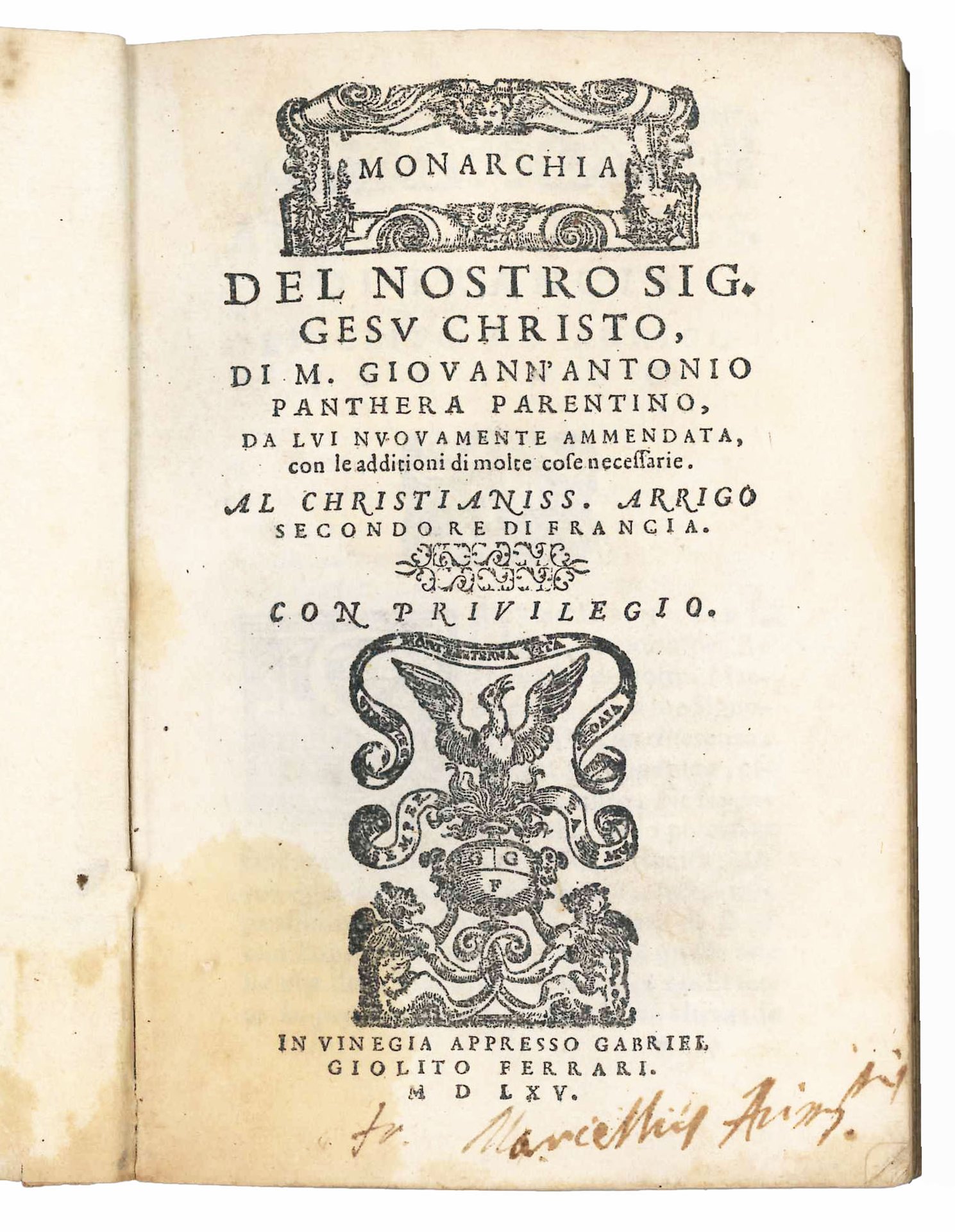
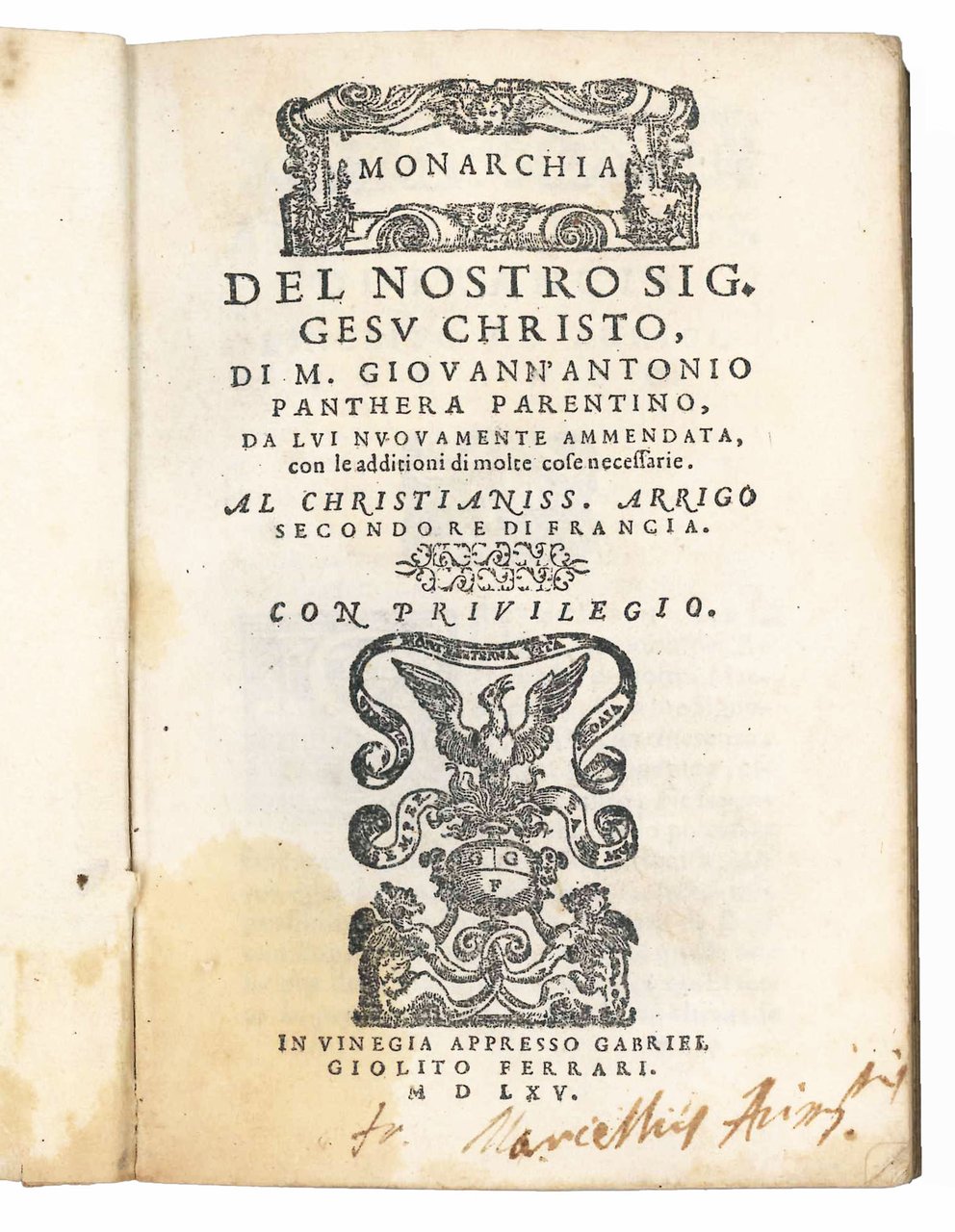
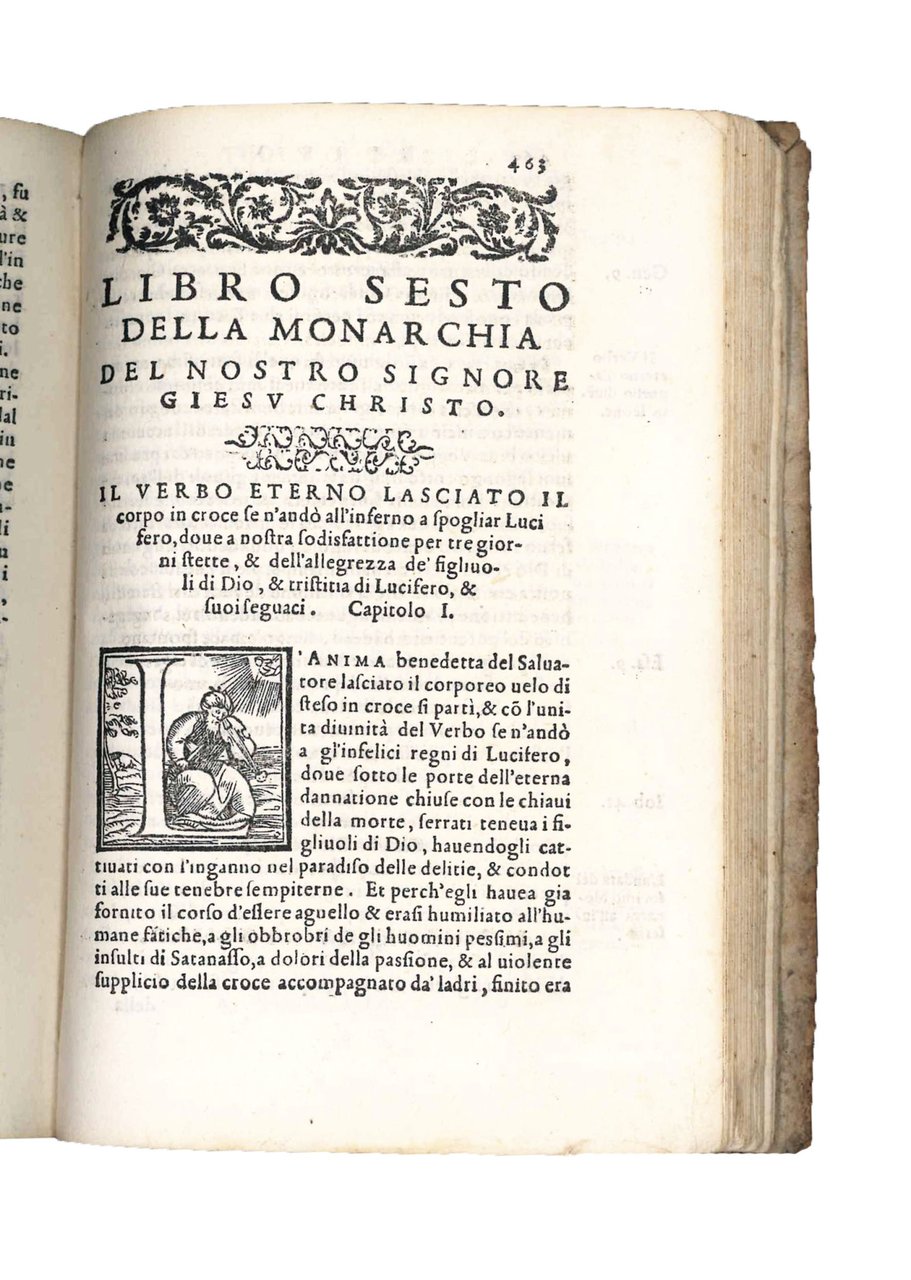
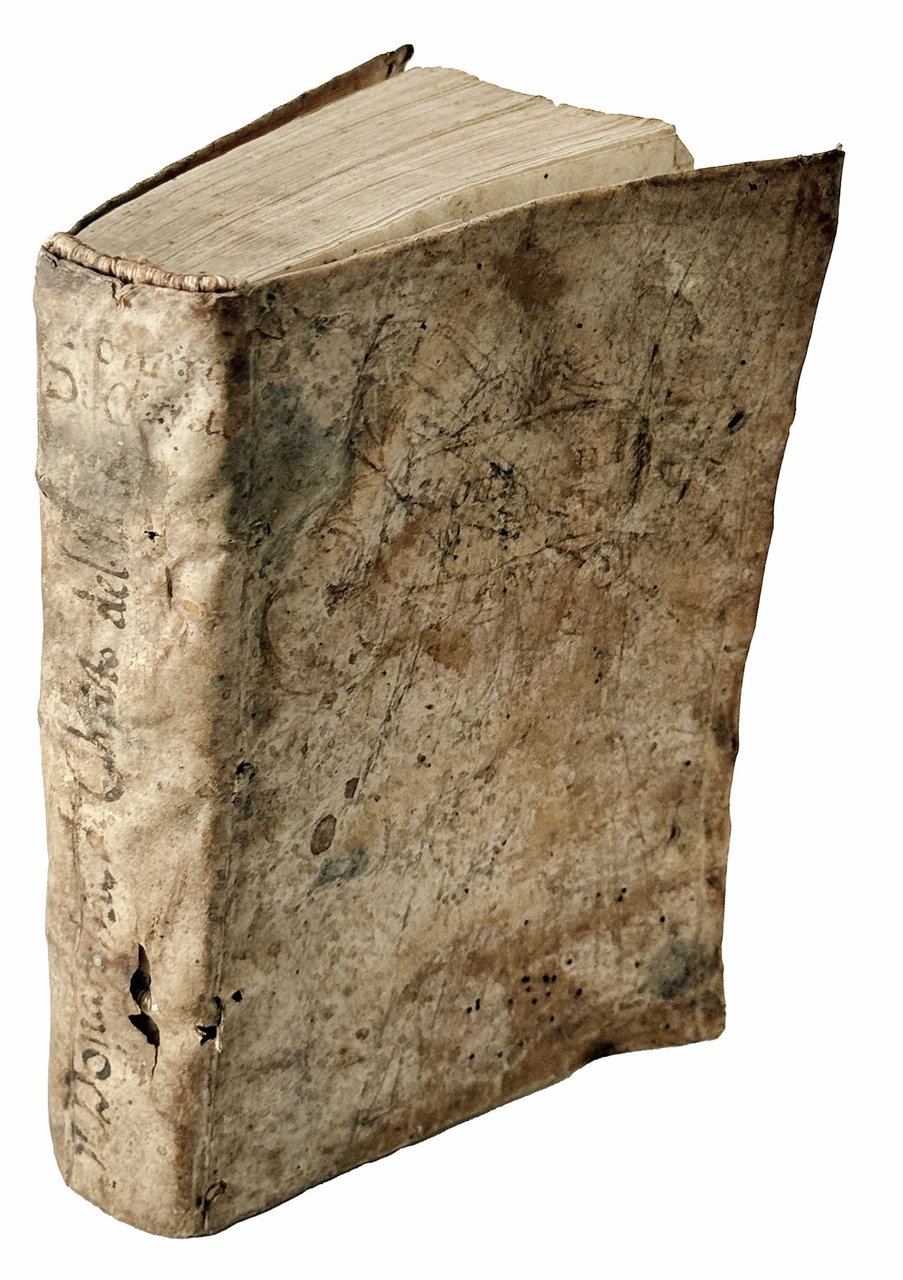
8vo (152x106 mm). Collation: *⁸ **⁴ A-Ll⁸. [24], 543, [1] pp. Woodcut printer's device on the title-page and on the final page, woodcut head- and tail-pieces, vignettes and historiated initials. With printed marginalia and a final register. Text in roman and italic type. Ownership entries at the front flyleaf and at the title page ('fr. Marcellii [...]'). Contemporary vellum with manuscript title on the spine and on the front panel (soiled and slightly worn, minor loss to spine). Large stain to the inner margin of the first 250 pages ca., overall a good, genuine copy.
Sixth edition of Giovanni Antonio Pantera's colourful biblical narrative inspired by the Apocalypse of St John. First printed in 1545, this volume became immediately popular and was quickly reprinted several times. Due to its controversial central prophecy, which predicted a utopian millennium in which all wars would cease and religious conflict would end ("Monarchia del Mondo"), the book attracted significant attention from inquisitors and censors during the Reformation. Indeed, it was listed as a forbidden work in the Venetian, Sistine and Sistine-Clementine indexes. The author recounts the story of Lucifer's battles against Jesus Christ. The volume is organised into six books comprising a total of 181 chapters, which describe the struggle between God and the Devil. It lies halfway between a theological treatise and a spiritual tale. The work has a notably pro-French bias, presumably intended to encourage a closer alliance between Henry II and Paul III. Bayle commented on this work in his dictionary (entry 'Xenophanes', 4:518): "I have read an Italian book entitled Monarchia del Nostro Signore Giesu Christo [...]".
Little is known about Pantera's life. A native of Cittanova (Novigrad, today Croatia), he was canon and archpriest of the Parenzo (Poreč) Cathedral. This was his only publication. Although Pantera remained a Catholic, he wrote about a religion that avoided unnecessary ceremony, focusing instead on the almighty power and goodness of Christ. This Christo-centric approach was in line with other similar publications in Venice during the period. Pantera's central message is clear: the human race is hopeless without the worship and reverence of Christ (cf. P. Stancovich, Biografia degli uomini distinti dell'Istria, Capodistria, 1888, p. 181).
Gabriele Giolito De Ferrari (1536–1580) was a publisher and printer based in Venice. Born in Trino, he settled in Venice with his father Giovanni in 1523 and remained there when his father moved to Turin. He was in business with his brothers Giovanni Francesco and Bonifacio and with his half-brother Giovanni Cristoforo. At the start of his career, he used typefaces by Bernardino Stagnino, a relative of his, and by Bartolomeo Zanetti. He had a workshop in Rialto, under the sign of the Phoenix, and also opened bookshops in Naples, Bologna and Ferrara. He died in 1578.
Edit16, CNCE 47225; OCLC, 954822334; G. Caravale, Profezia e censura nell'Italia di fine Cinquecento. GA Pantera e l'Inquisizione, in: "Bruniana e Campanelliana", XVIII.1, 2012, pp. 221-232.