Instituzioni di meccanica, d'idrostatica, d'idrometria e dell'architettura statica, e idraulica ad uso della Regia Scuola eretta di Milano per gli Architetti, e per gli'Ingegneri
Instituzioni di meccanica, d'idrostatica, d'idrometria e dell'architettura statica, e idraulica ad uso della Regia Scuola eretta di Milano per gli Architetti, e per gli'Ingegneri | Libri antichi e moderni | FRISI, Paolo (1728-1784)
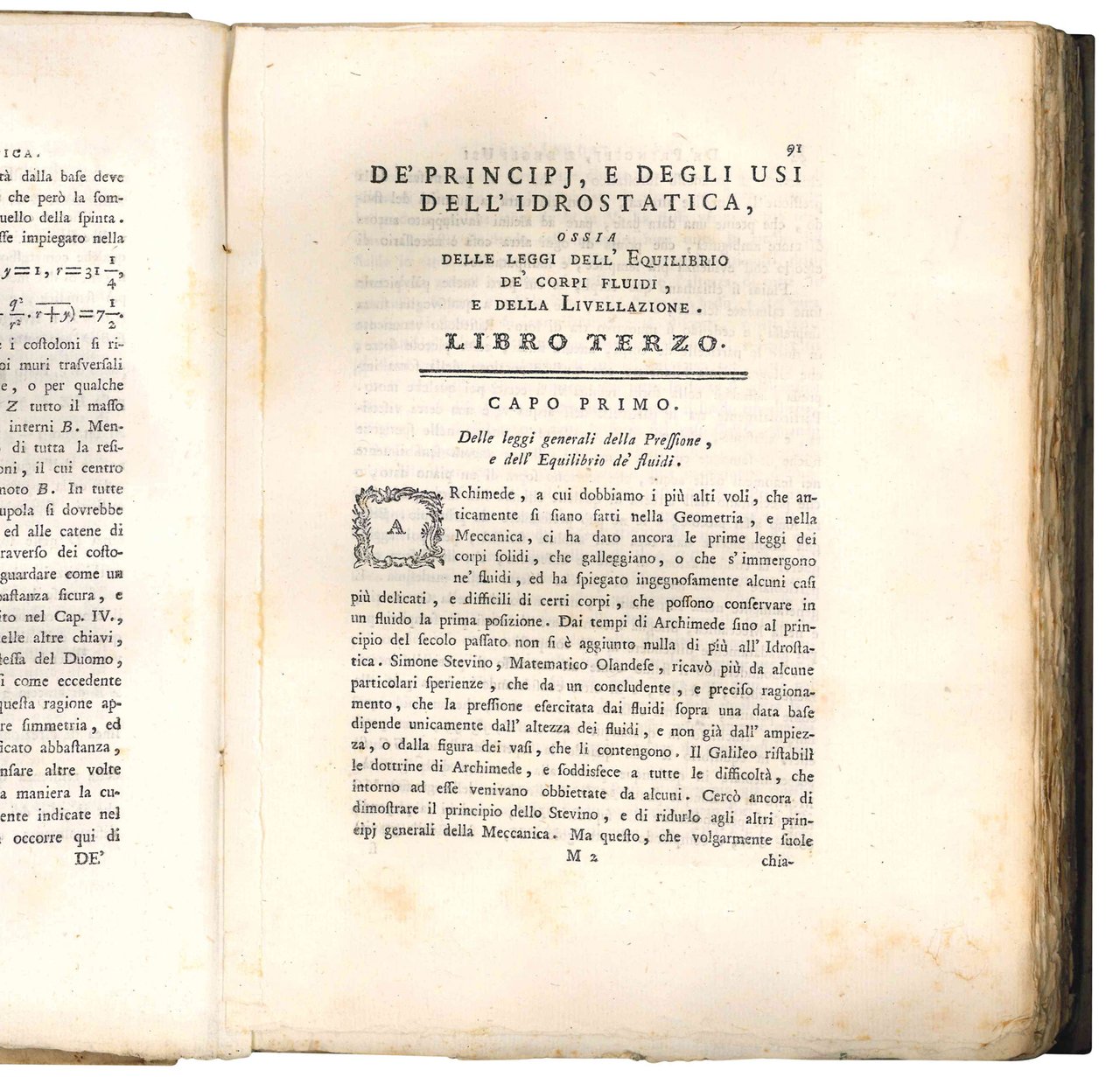
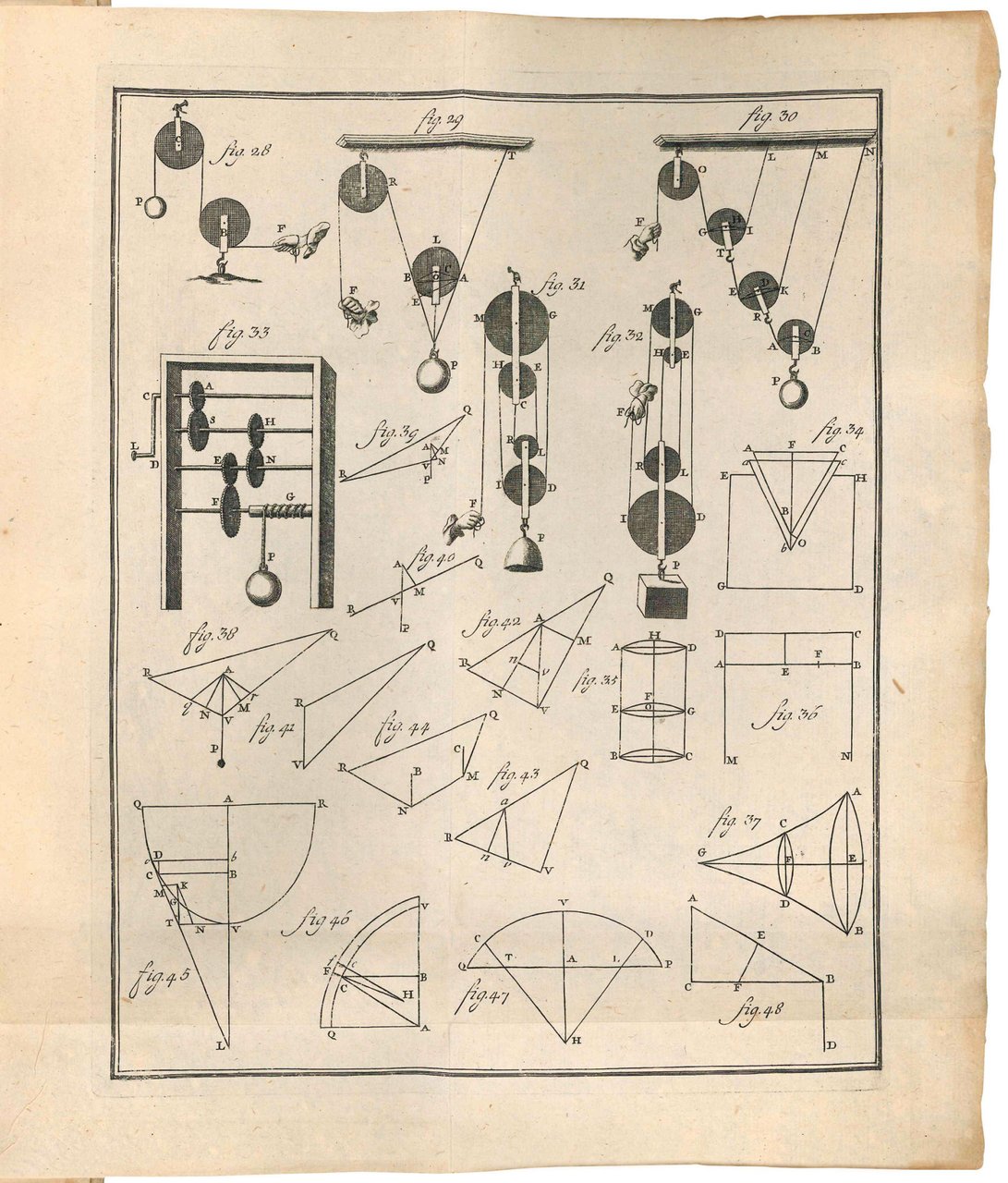
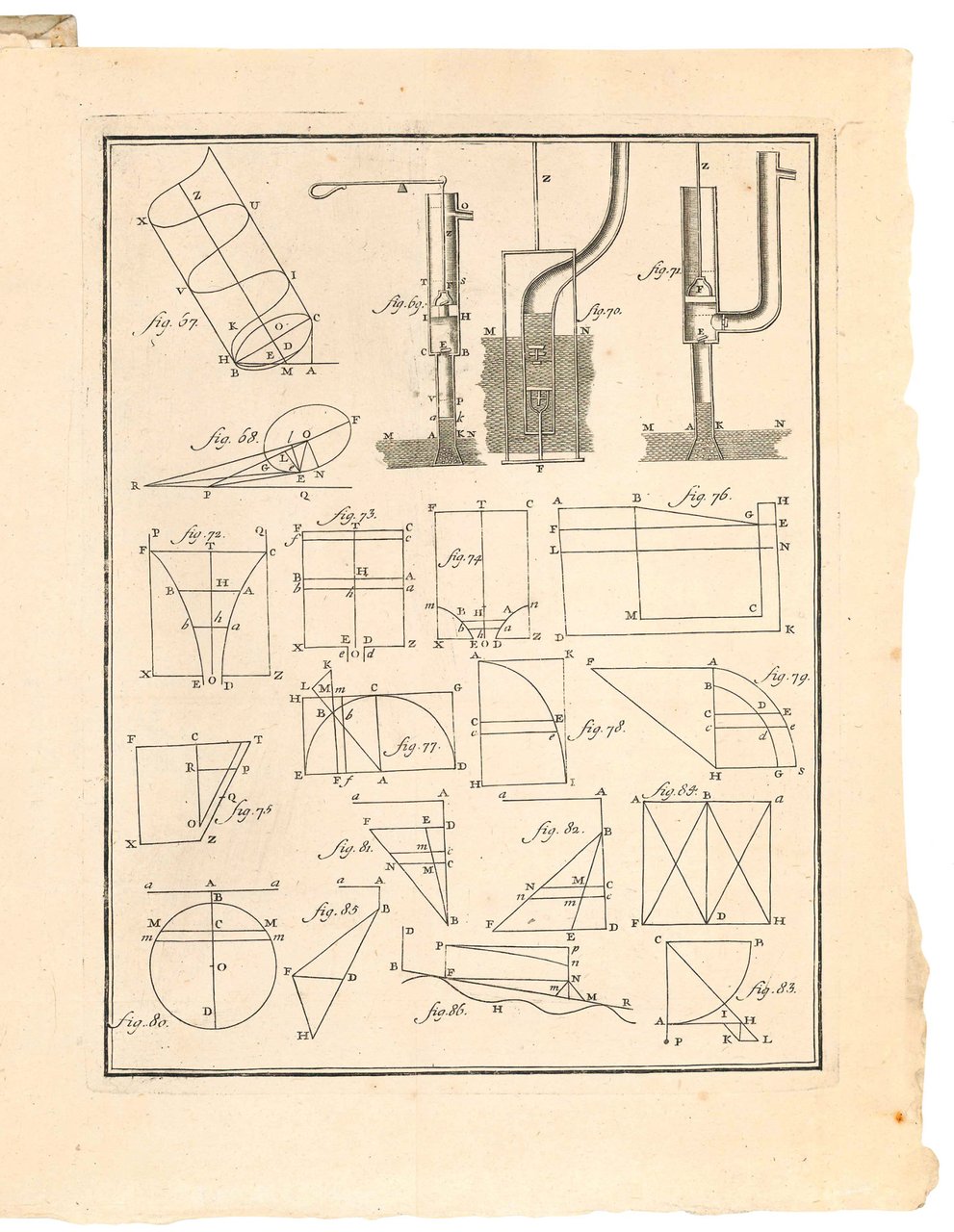
Instituzioni di meccanica, d'idrostatica, d'idrometria e dell'architettura statica, e idraulica ad uso della Regia Scuola eretta di Milano per gli Architetti, e per gli'Ingegneri
Instituzioni di meccanica, d'idrostatica, d'idrometria e dell'architettura statica, e idraulica ad uso della Regia Scuola eretta di Milano per gli Architetti, e per gli'Ingegneri | Libri antichi e moderni | FRISI, Paolo (1728-1784)
Metodi di Pagamento
- PayPal
- Carta di Credito
- Bonifico Bancario
- Pubblica amministrazione
- Carta del Docente
Dettagli
- Anno di pubblicazione
- 1777
- Luogo di stampa
- Milano
- Autore
- FRISI, Paolo (1728-1784)
- Editori
- Giuseppe Galeazzi Regio Stampatore
- Soggetto
- settecento
- Stato di conservazione
- Buono
- Lingue
- Italiano
- Legatura
- Rilegato
- Condizioni
- Usato
Descrizione
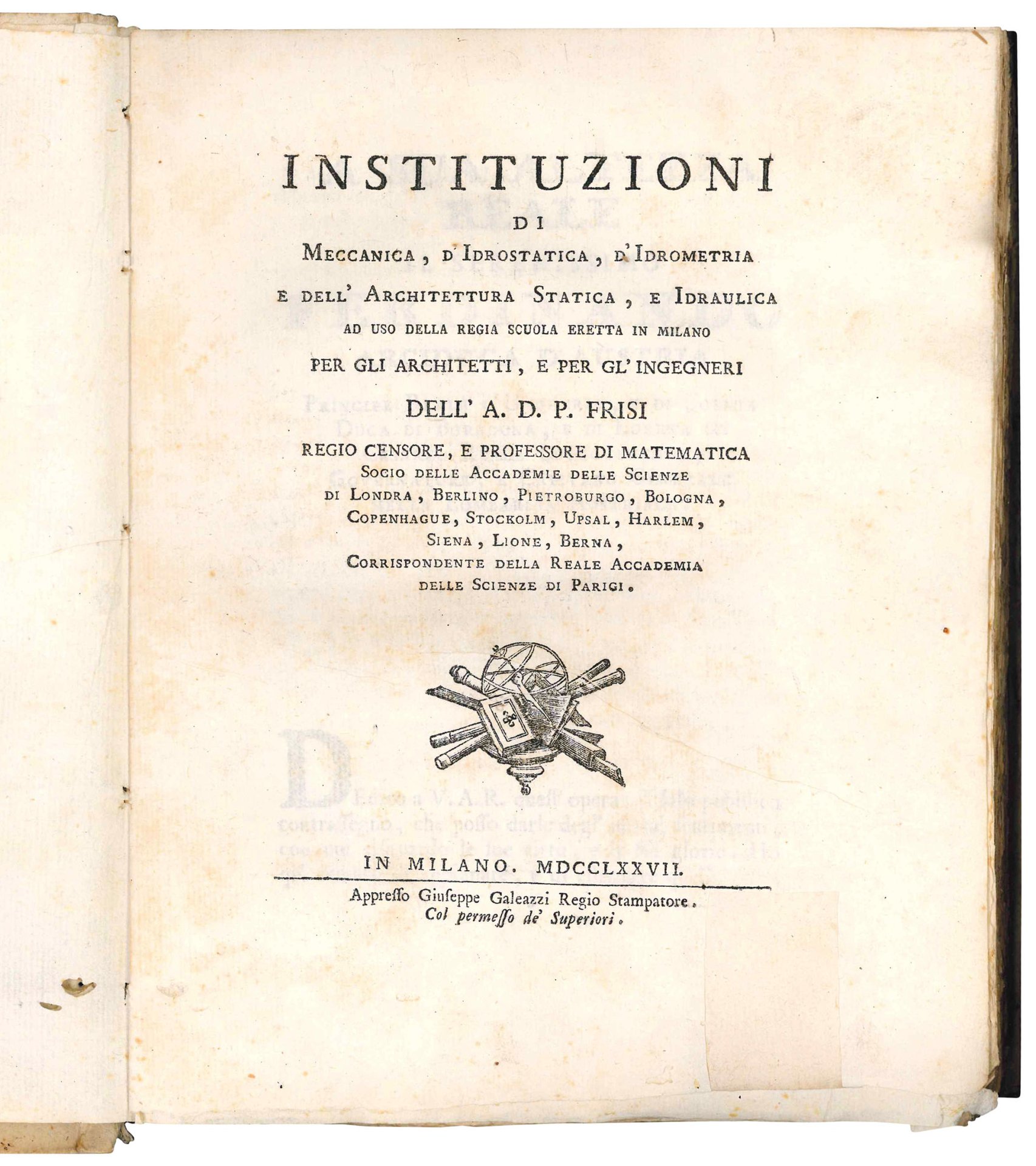
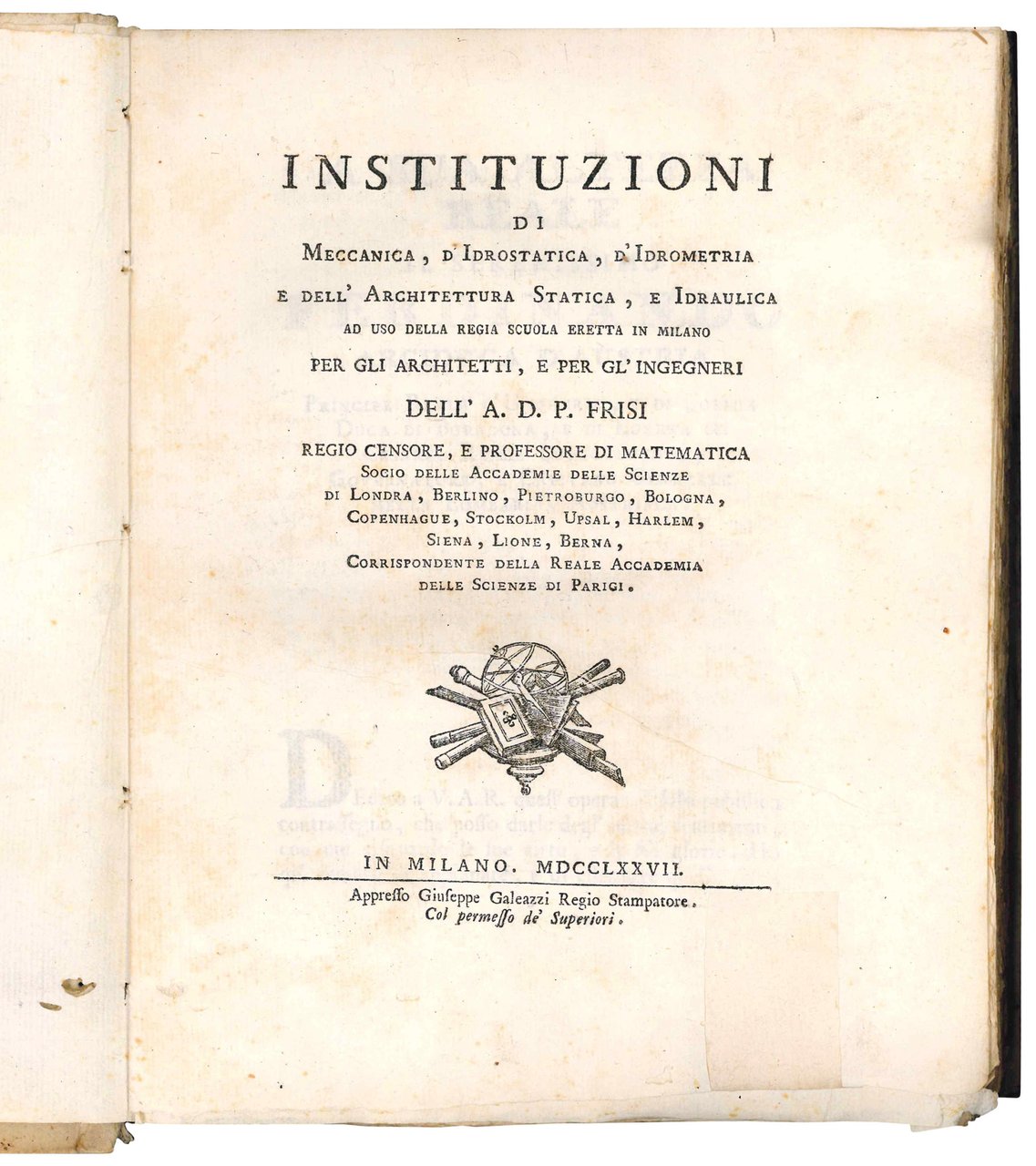
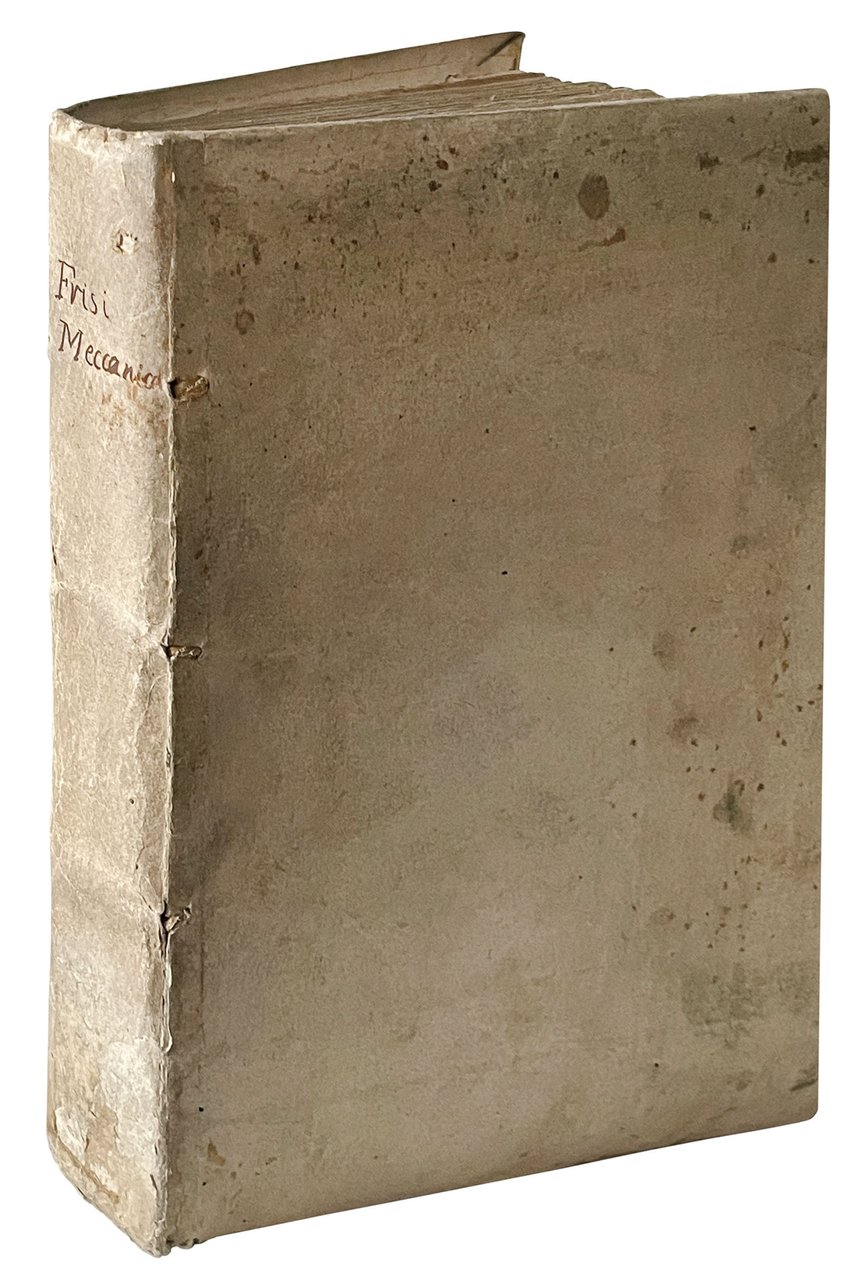
4to (225 x 220 mm). Pp. [8], 447, [1] pp. and [7] folding plates. Collation: A-Z⁴ Aa-Zz⁴ Aaa-Kkk⁴. Woodcut vignette on the title pahe, head- and tail-pieces. Contemporary cardboards, manuscript title on spine (lightly rubbed and stained). Restoration to the title page and last page not affecting the text. Some warm tracks on the flyleaves and on the lower blank margin of the first quires, plates slightly, uniformly browned, some occasional pale foxing, a good copy. Unctu with deckle edges.
First edition. "This is a general treatise on mechanics, hydraulics, hydrology and river management. Frisi covers the basic principles of physics, properties of materials, hydrostatic and fluid dynamics, air pressure, simple machines, open-channel flow and river hydraulics. Frisi also address specific projects with accounts of draining the Pontine Marshes near Rome and managing the Venetian Lagoon, and propals to divert the Reno River" (M.E. Andrews, The science and engineering of water, Toronto, 2022, p. 252).
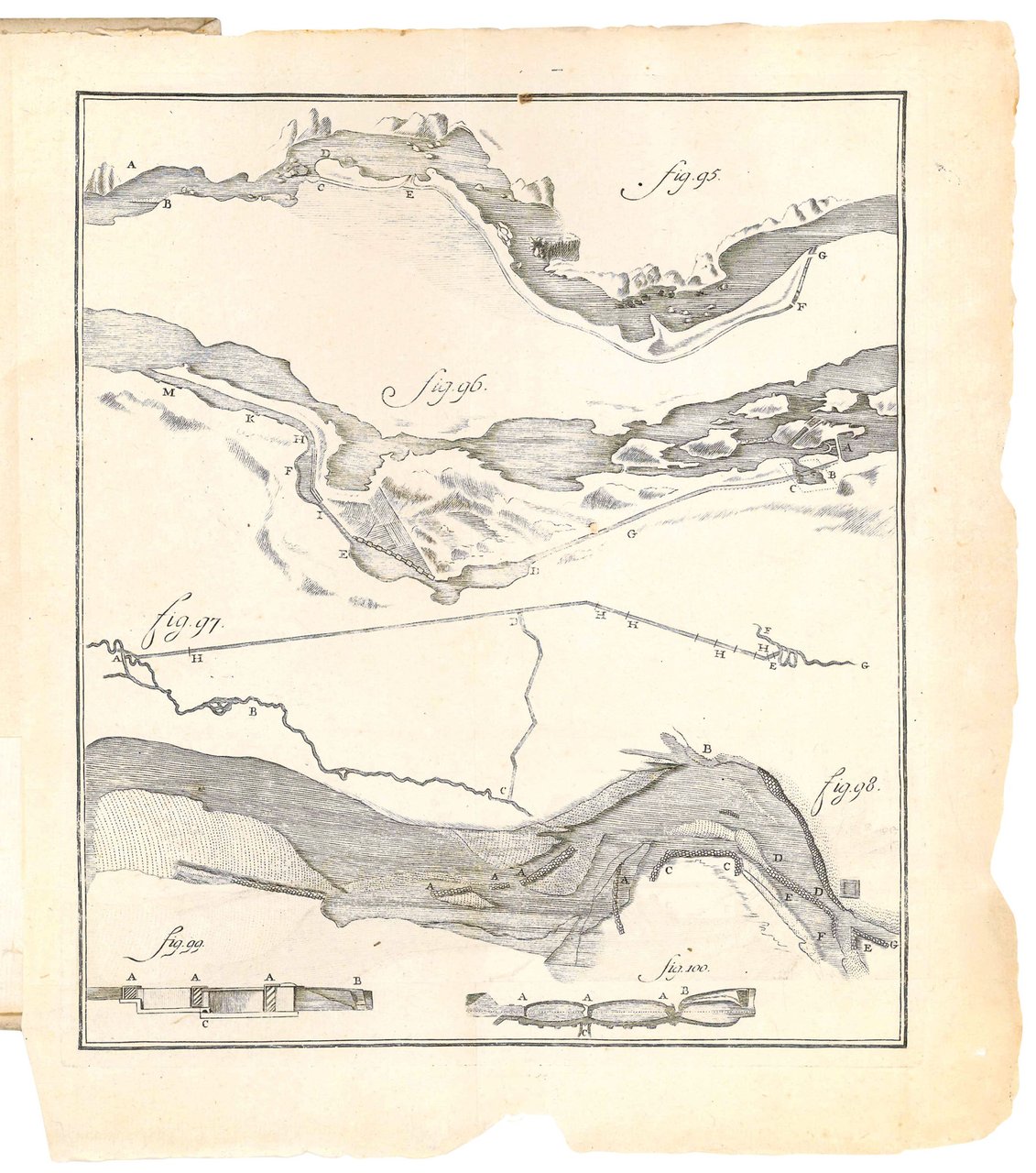
The treatise is illustrated with seven engraved plates containing diagrams showing force vectors for load-bearing structures, the physics of arches and vaults, hydrostatic pressure formulas and detailed cross-sections of engineering projects such as canals. It is organised into progressive scientific modules designed to guide students from the study of pure physics to the practice of field engineering.
- Mechanics and Statics: The initial sections set out the foundational laws of solid mechanics and structural equilibrium (architettura statica), focusing on load distribution across arches, beams and columns using advanced vector mathematics.
- Hydrostatics and Hydrometry: Moving beyond solids, Frisi introduces the mathematical properties of stationary fluids (idrostatica) and the measurement of water velocity and pressure (idrometria).
- Practical Hydraulics: The final section applies these mathematical principles to practical engineering solutions for canalisation, river diversion and flood mitigation, drawing on Frisi's real-world experience working on the Po and Arno river basins.
Born in Milan, Paolo Frisi joined the Order of the Barnabites at a young age. This path granted him access to the highest levels of European scientific education. He soon became a professor of philosophy and mathematics in Milan, Pisa and Bologna. Frisi was a staunch proponent of Newtonian physics at a time when older Cartesian theories still dominated many Italian universities. His brilliant work earned him international acclaim and membership of the most prestigious scientific bodies of the era, including the Royal Society of London, the Paris Academy of Sciences and the Imperial Academy of St Petersburg. Outside of academia, Frisi served as a key consultant to the Habsburg administration in Lombardy, providing expert advice on major public infrastructure projects, urban planning, and territorial water management. He aimed to make abstract mathematics useful to human society. In pure science, he published pioneering works such as De gravitate universali (1768), in which he calculated planetary perturbations and confirmed Newton's gravitational theories. However, his most enduring practical legacy lies in hydraulics and structural engineering, which intersected directly with the architecture of his time. In his masterpiece, Del modo di regolare i fiumi e i torrenti ('On the Method of Regulating Rivers and Torrents', 1762), he transformed hydraulic architecture across Europe by using advanced calculus to solve the problem of devastating floods in northern Italy.
Riccardi,I, p. 489; Gamba, 2245; Italian Union Catalogue, IT\ICCU\RMSE\001865.