Il ritratto del vero governo del prencipe dall'essempio vivo del gran Cosimo de' Medici [...]
Il ritratto del vero governo del prencipe dall'essempio vivo del gran Cosimo de' Medici [...] | Libri antichi e moderni | ROSELLO, Lucio Paolo (d. 1552)
Il ritratto del vero governo del prencipe dall'essempio vivo del gran Cosimo de' Medici [...]
Il ritratto del vero governo del prencipe dall'essempio vivo del gran Cosimo de' Medici [...] | Libri antichi e moderni | ROSELLO, Lucio Paolo (d. 1552)
Metodi di Pagamento
- PayPal
- Carta di Credito
- Bonifico Bancario
- Pubblica amministrazione
- Carta del Docente
Dettagli
- Anno di pubblicazione
- 1552
- Luogo di stampa
- Venezia
- Autore
- ROSELLO, Lucio Paolo (d. 1552)
- Editori
- Al Segno del Pozzo (per Giovanni Maria Bonelli)
- Soggetto
- Quattro-Cinquecento
- Stato di conservazione
- Buono
- Lingue
- Italiano
- Legatura
- Rilegato
- Condizioni
- Usato
Descrizione
AN ERASMIAN MACHIAVELLIAN
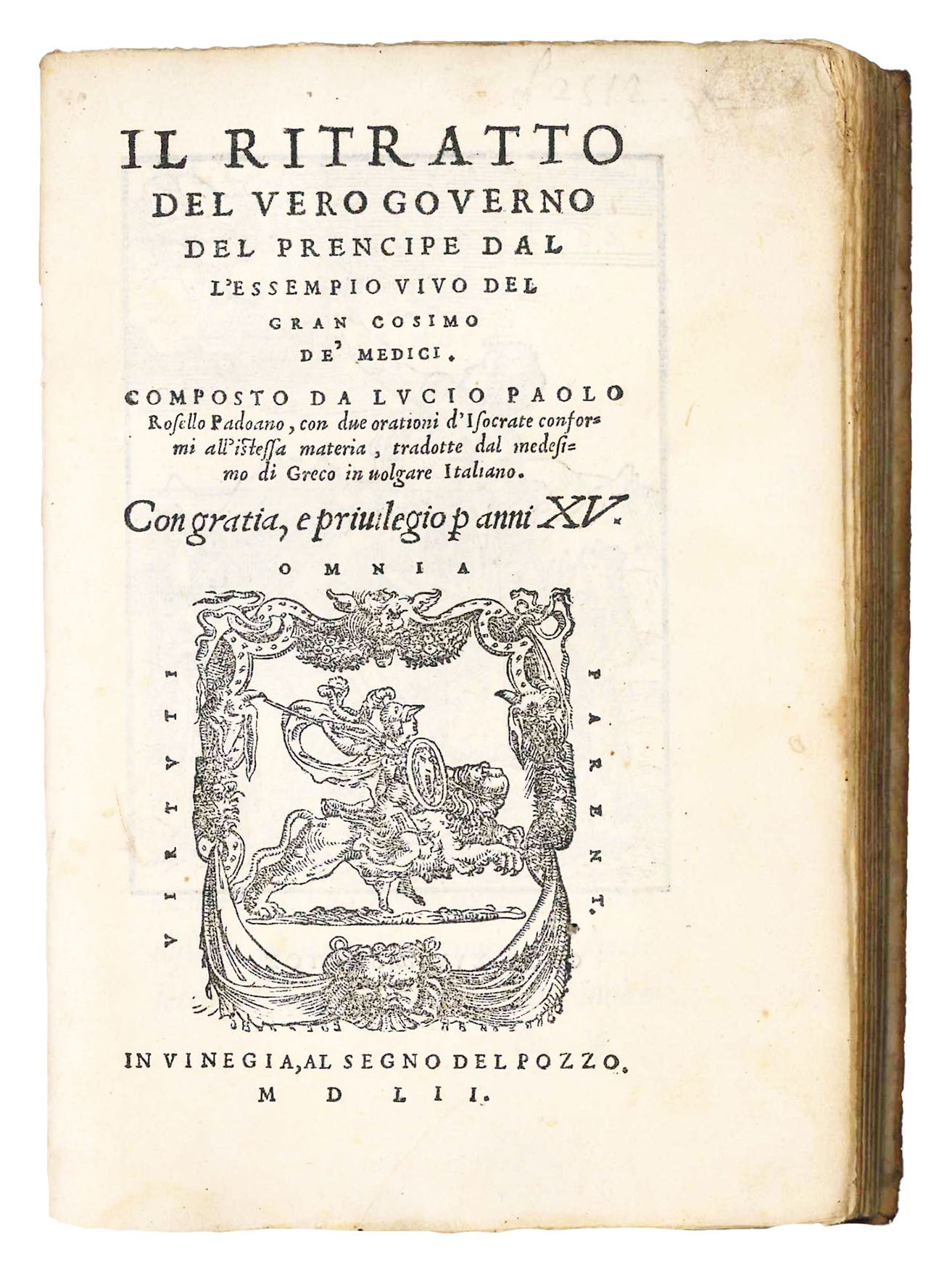
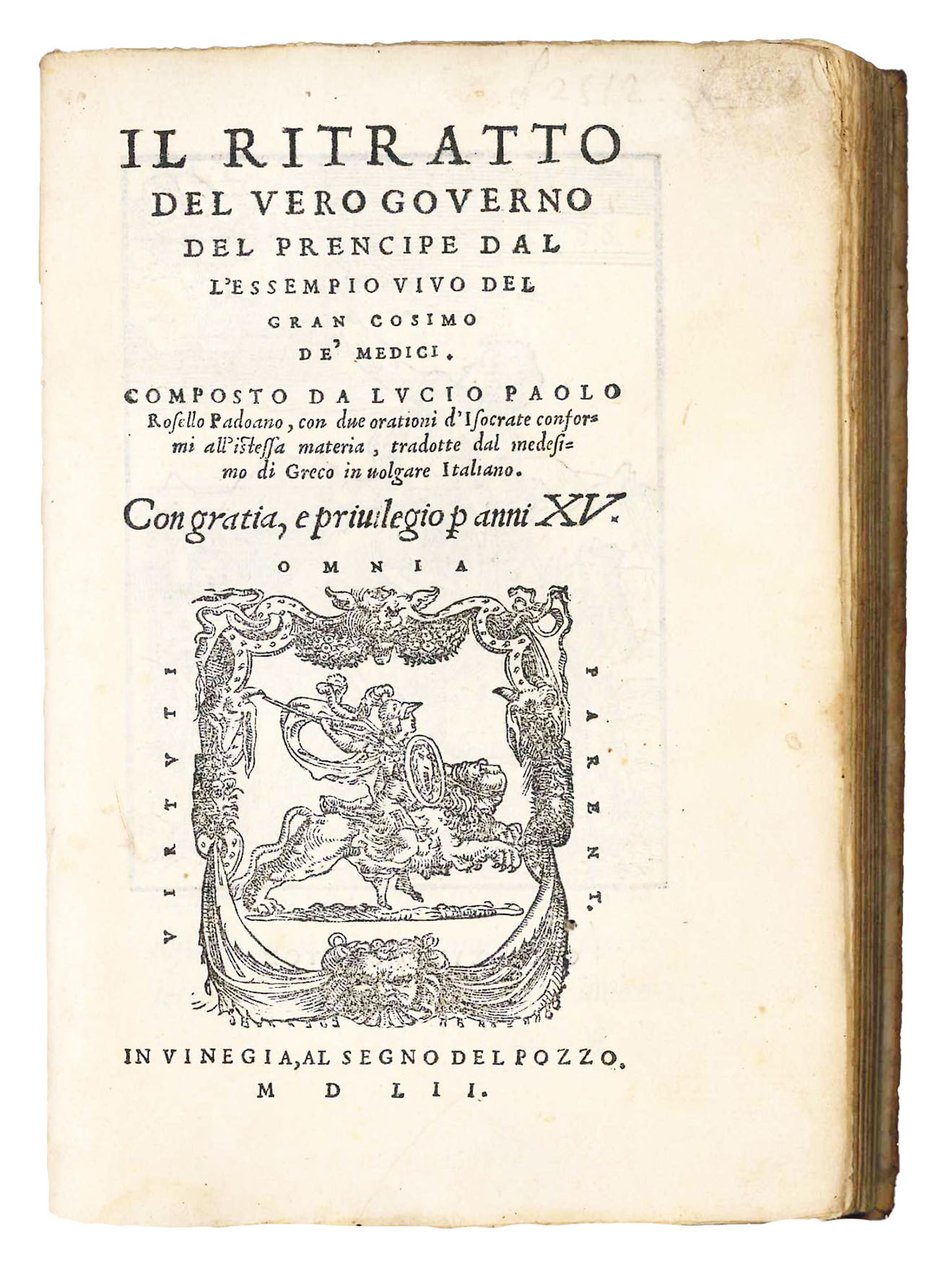
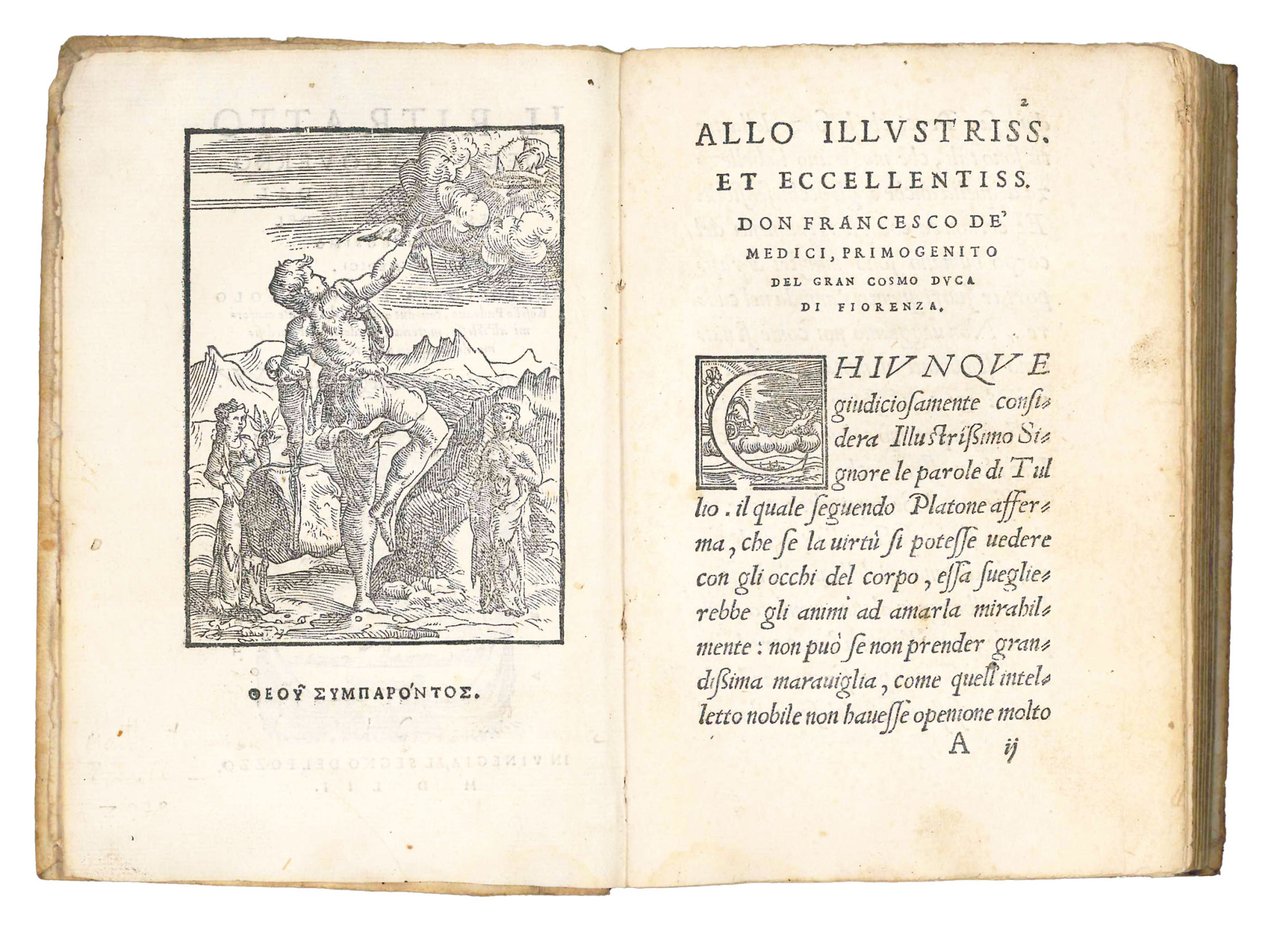
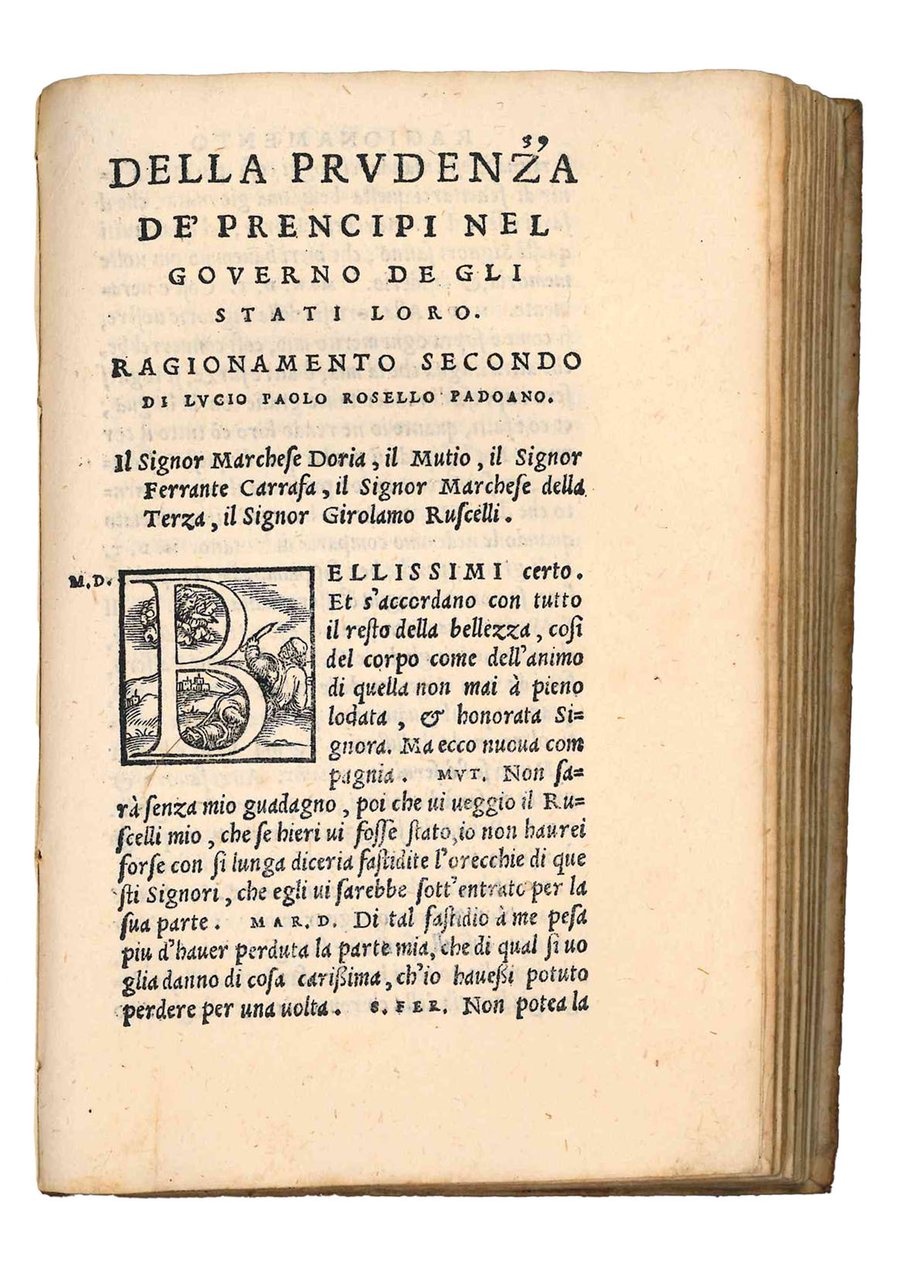
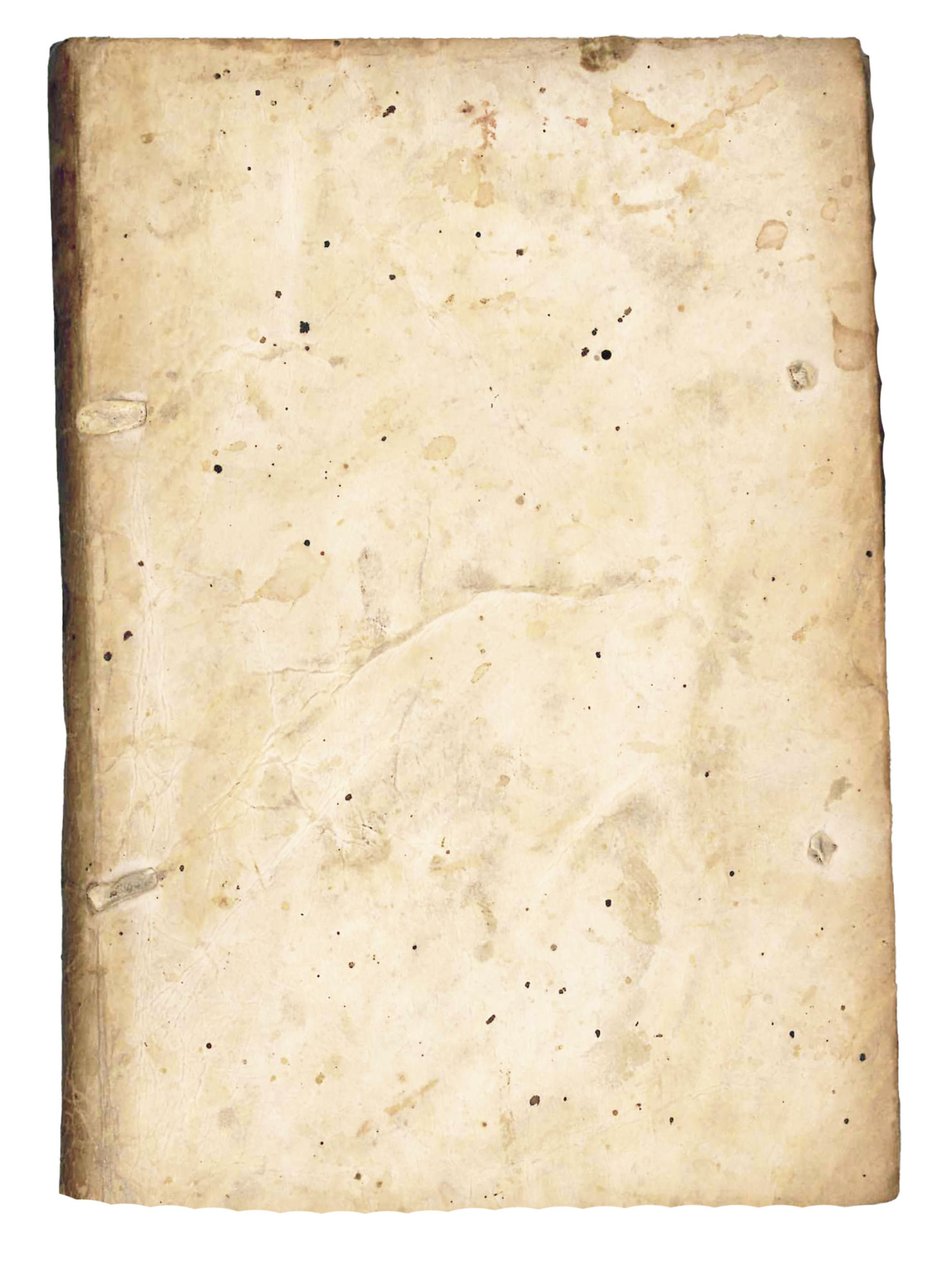
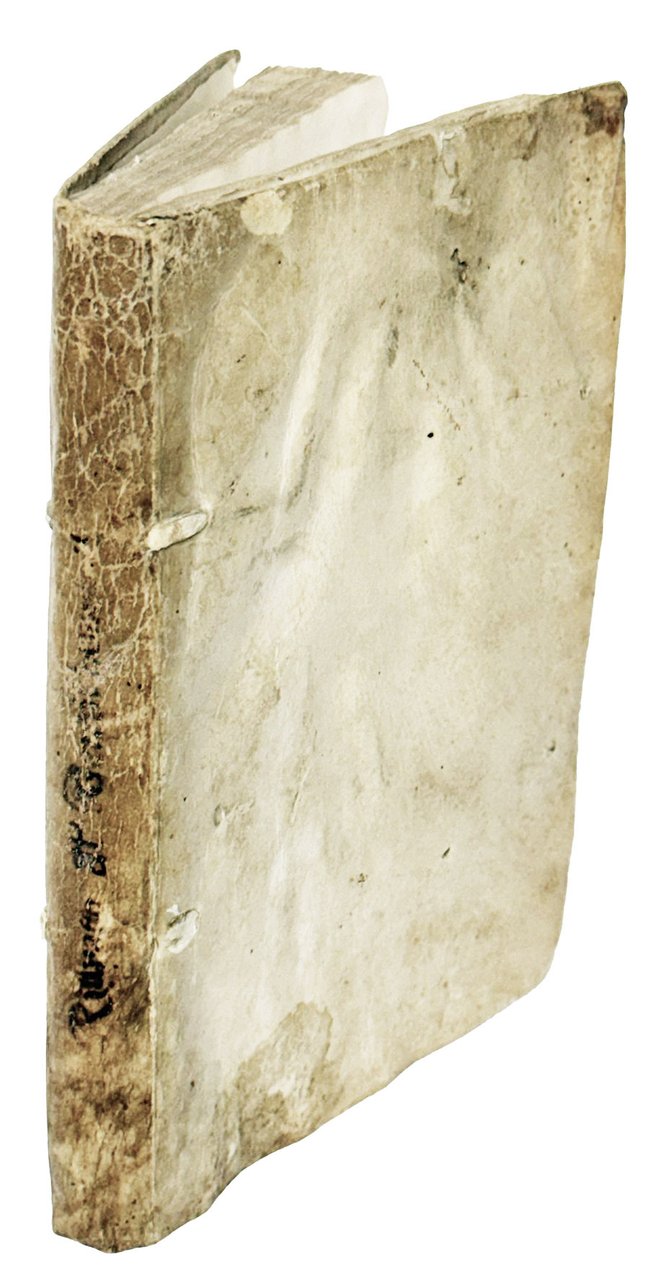
4to (153x105 mm). 107, [3] pp. Collation: A- N⁸ O⁴. Contemporary limp vellum, signs of ties, partially faded inked title on spine (slightly stained and soiled). Bonelli's woodcut device on title page (Minerva riding a lion) with the latin motto "Virtuti omnia parent" ('Everything leads to virtue'). Woodcut historiated initials and, on title-page verso, large woodcut illustration of a man holding a rock and pointing to a dove and a crown within clouds, with the Greek motto "God is with me". Some occasional light foxing and staining, but a very good, genuine copy.
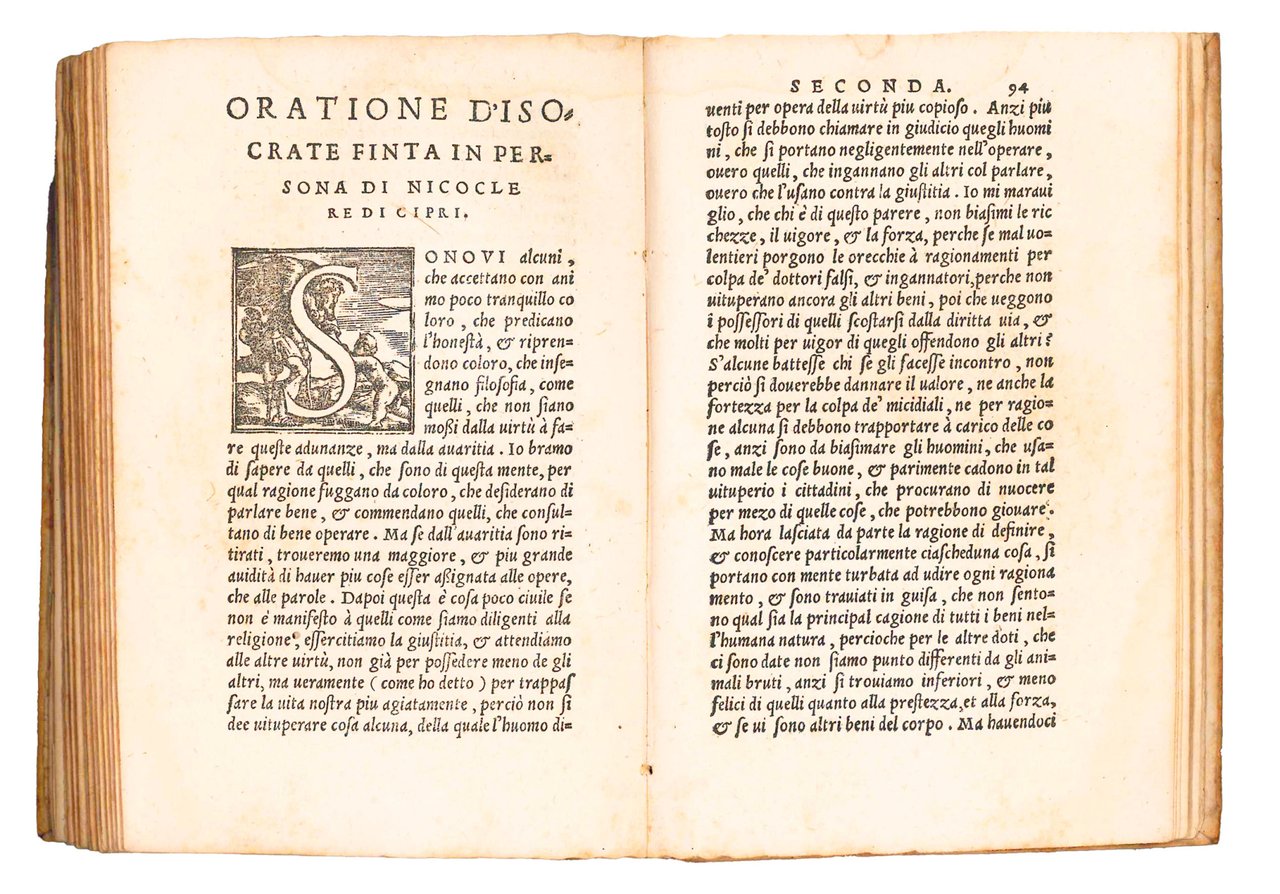
First and only edition, dedicated by the author to Cosimo the Medici's firstborn, Francesco, with an obvious pedagogical aim. Rosello's work is divided into two “Ragionamenti” followed by two Isocrates' Orationes translated from the Greek by the author himself and already translated from the Latin by Erasmus and published as an appendix to many editions of his Institutio principis christiani.
Il ritratto is structured as a dialogue, a literary style much appreciated in the 16th century which permits a certain neutrality. The interlcutors of the first “Ragionamento”, which takes place in Naples (the city where Juan de Valdès lived for a period), are Girolamo Muzio (Italian humanist, courtier, and literary theorist closely associated with Counter-Reformation culture), Ferrante Carafa (a Neapolitan nobleman, soldier, and man of letters active in the cultural and political life of Spanish Naples), and the Marquis of Laterza Giambattista d'Azzia (a Neapolitan nobleman and intellectual associated with the aristocratic and literary circles of the Kingdom of Naples under Spanish rule). Choosing historical relevant people instead of fictional characters, shows Rosello's intention of disclosing his own political position: Muzio, for instance, is the leading character in the conversation (“princeps sermonis”), but he was also a controversial personality who publicly joined the Counter-Reformation: he therefore represents an ideological position that Rosello needed to put forward after his conviction for heresy.
Muzio begins the dialogue by recalling his experience at Henry II of France's court: while drawing inspiration from Machiavelli's The Prince, Rosello significantly modifies the meaning of his example, which considered the institution of the French Parliament as a means for the king to combat the “great” and favor the “lesser”; here, instead, its institution is seen as a guarantee for the sovereign, who thus manages to maintain equidistance from the warring classes. Muzio also recalls as well his time spent at Cosimo the Medici's court in Florence: the Grand Duke was legitimately elected by incorruptible free men and he always had been tolerant towards his enemies. Carafa, embracing Machiavelli's philosophy more closely, replies that a prince should instead “exstinguish” his opponents, while Muzio, who represents the author's and Erasmus' perspective, considers it a dangerous behaviour especially in case of conflicts. Other topics addressed include the cruelty of the prince, whether he should be loved or feared, and his qualities and education, as well as that of his sons. Several examples are taken from Erasmus's Apophthegmata, Declamatio de pueris instituendis, Adagia, and Institutio principis christiani. However, as with Machiavelli, Rosello never mentions Erasmus as a source.
The second “Ragionamento” deals with the usefullness of weapons and literature as a mean to preserve the State. It has two new interlocutors: Girolamo Ruscelli (a sixteenth-century Venetian humanist, editor, and cartographer whose works contributed significantly to Renaissance geography and scientific dissemination) and Bernardino Bonifacio (an Italian humanist, and bibliophile renowned for his extensive intellectual networks and his commitment to the preservation of books and learning. His personal library, later donated to the city of Ljubljana, became one of the most im