Capitoli ed ordini della Matricola degli Orefici, ed Argentieri eretta in Lucca colla sopraintendenza degl'Illustriss. Sig. Commissarj di Zecca della Sereniss. Repubblica di Lucca
Capitoli ed ordini della Matricola degli Orefici, ed Argentieri eretta in Lucca colla sopraintendenza degl'Illustriss. Sig. Commissarj di Zecca della Sereniss. Repubblica di Lucca | Libri antichi e moderni | LUCCA-GUILD OF GOLDSMITHS AND SILVERSMITHS
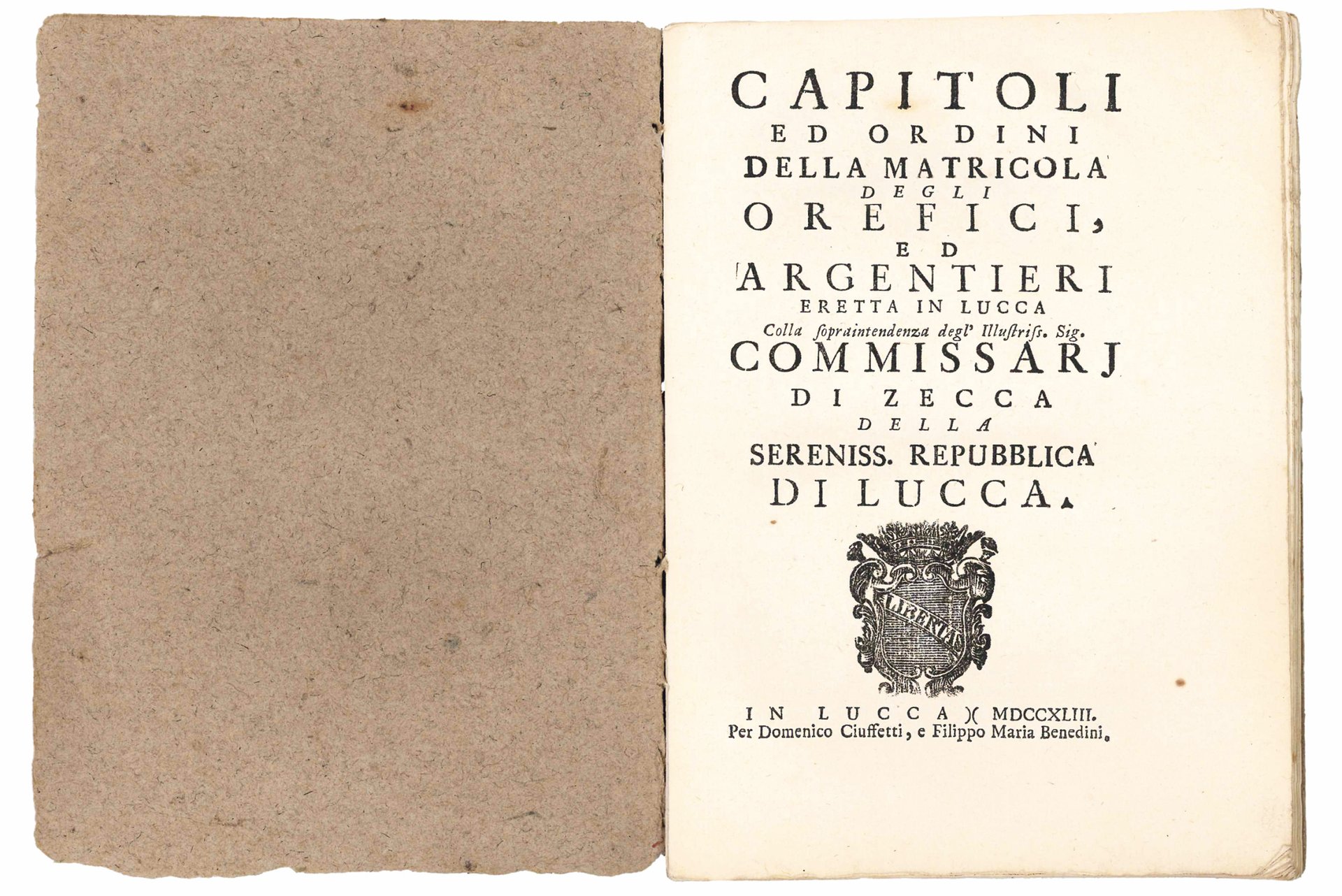

Capitoli ed ordini della Matricola degli Orefici, ed Argentieri eretta in Lucca colla sopraintendenza degl'Illustriss. Sig. Commissarj di Zecca della Sereniss. Repubblica di Lucca
Capitoli ed ordini della Matricola degli Orefici, ed Argentieri eretta in Lucca colla sopraintendenza degl'Illustriss. Sig. Commissarj di Zecca della Sereniss. Repubblica di Lucca | Libri antichi e moderni | LUCCA-GUILD OF GOLDSMITHS AND SILVERSMITHS
Metodi di Pagamento
- PayPal
- Carta di Credito
- Bonifico Bancario
- Pubblica amministrazione
- Carta del Docente
Dettagli
- Anno di pubblicazione
- 1743
- Luogo di stampa
- Lucca
- Autore
- LUCCA-GUILD OF GOLDSMITHS AND SILVERSMITHS
- Editori
- Domenico Ciuffetti and Filippo Maria Benedini
- Soggetto
- settecento
- Stato di conservazione
- Buono
- Lingue
- Italiano
- Legatura
- Rilegato
- Condizioni
- Usato
Descrizione
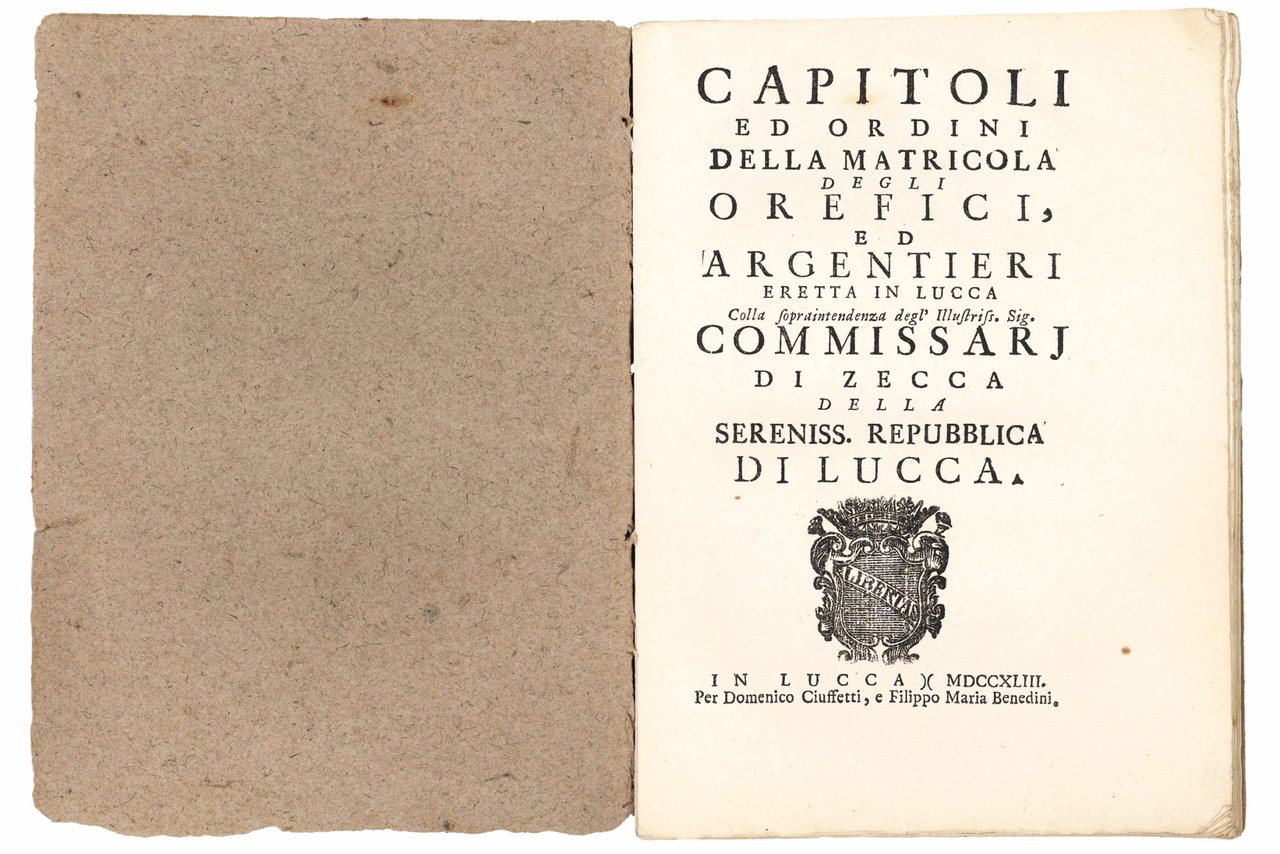
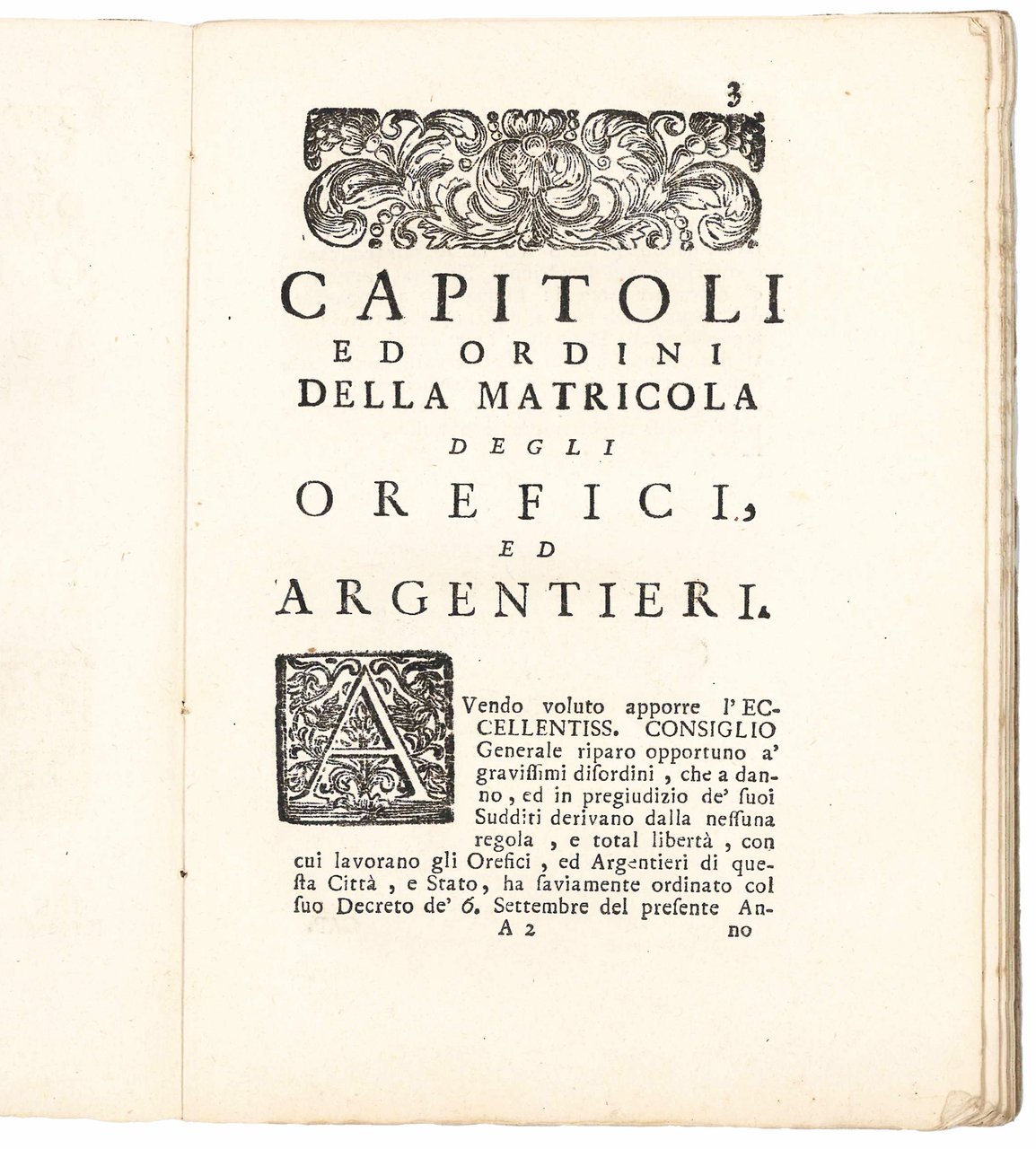
4to (200x144 mm). 40, [4: index] pp. Woodcut arms of the city of Lucca on the title page. Woodcut initial, head- and tail-piece. Contemporary grey wrappers. Volume slightly loose, lacking a portion of the lower outer corner of pp. 25/26 not affecting the text, all in all a very good, genuine copy.
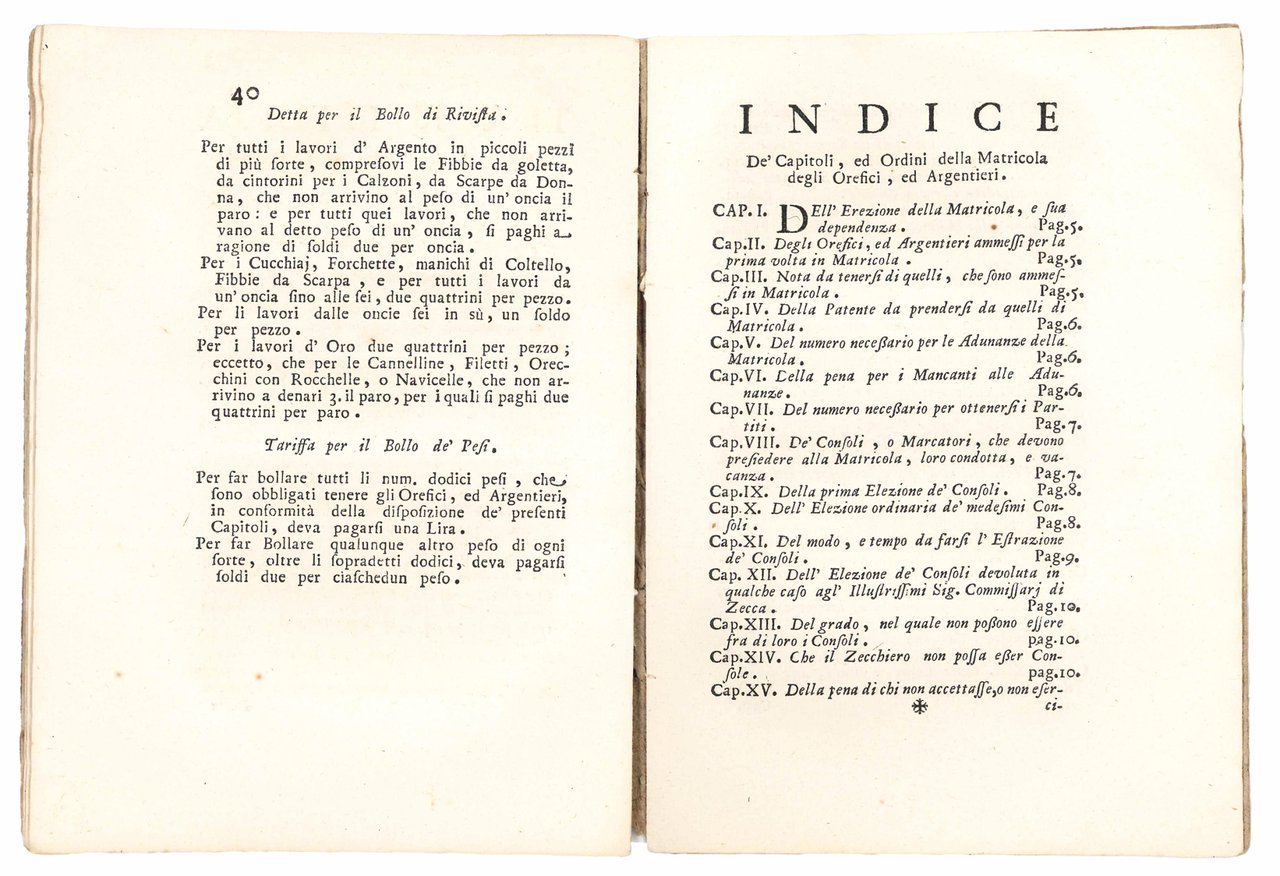
Rare first edition of the statutes and regulations of the guild of goldsmiths and silversmiths of the Republic of Lucca. The 65 articles regulate the admission to the guild, the election of the consuls, the assemblies, the procedure for becoming a master, the workers' acitivity, the standards of gold and silver, the prohibition of working from home or behind closed doors in the store, the proportion of gold to stone in rings, the obligation to mark all gold and silver production with the author's emblem, the fees payable to the mint for approval, the consuls' inspections of stores, the fines and punishments, the licences, and so on. The final two pages list the fees for having gold and silver objects evaluated and authenticated.
“As the regulation of [gold-plated and silver-plated items] fell within the competence of the Guild of Goldsmiths, chapters of the same content were included also in the statutes that regulated the life of this institution into the Early Modern period and beyond […] In order to protect consumers from this kind of fraud, the statutes of almost all Guilds of Goldsmiths outlawed the selling of gold that did not respect legally-established purity standards. In many early modern statutes the standards appeared to be established by the Guild itself, as part of its duty of control on the materials used by its members […] A similar provision from the 1743 statute of the Guild of the Goldsmiths and the Silversmiths of Lucca in the same way prescribed that metal products could be gold-plated or silver-plated only making sure that the original material was still visible in some part of the object. Only one kind of product could be gilded in its entirety, without leaving any space uncovered: the sacred vessels used for the Catholic mass” (F. Boldrini, All That Glitters Is Not Gold: False Jewellery and Its Juridical Regulation in Italy between the Late Middle Ages and the Early Modern Period, in: “Faking It! The Performance of Forgery in Late Medieval and Early Modern Culture”, Leiden-Boston, 2023, pp. 64-65).
Italian Union Catalogue, IT\ICCU\LO1E\017761; OCLC, 886440702 (overall 5 copies in Italy, none in the US); C. Chelazzi, Catalogo della raccolta di statuti, Rome, 1958, IV, p. 136.