Architettura civile demostrativamente proportionata et accresciuta di nuove regole con l'uso delle quali si facilita l'inventione d'ogni douuta proportione nelli cinque ordini. E col ritrovamento d'un nuovo strumento angolare si da il modo a gl'operarij medesimi di pratticamente stabilire le sacome in ogni loro necessario contorno
Architettura civile demostrativamente proportionata et accresciuta di nuove regole con l'uso delle quali si facilita l'inventione d'ogni douuta proportione nelli cinque ordini. E col ritrovamento d'un nuovo strumento angolare si da il modo a gl'operarij medesimi di pratticamente stabilire le sacome in ogni loro necessario contorno | Libri antichi e moderni | OSIO, Carlo Cesare (1612-?)
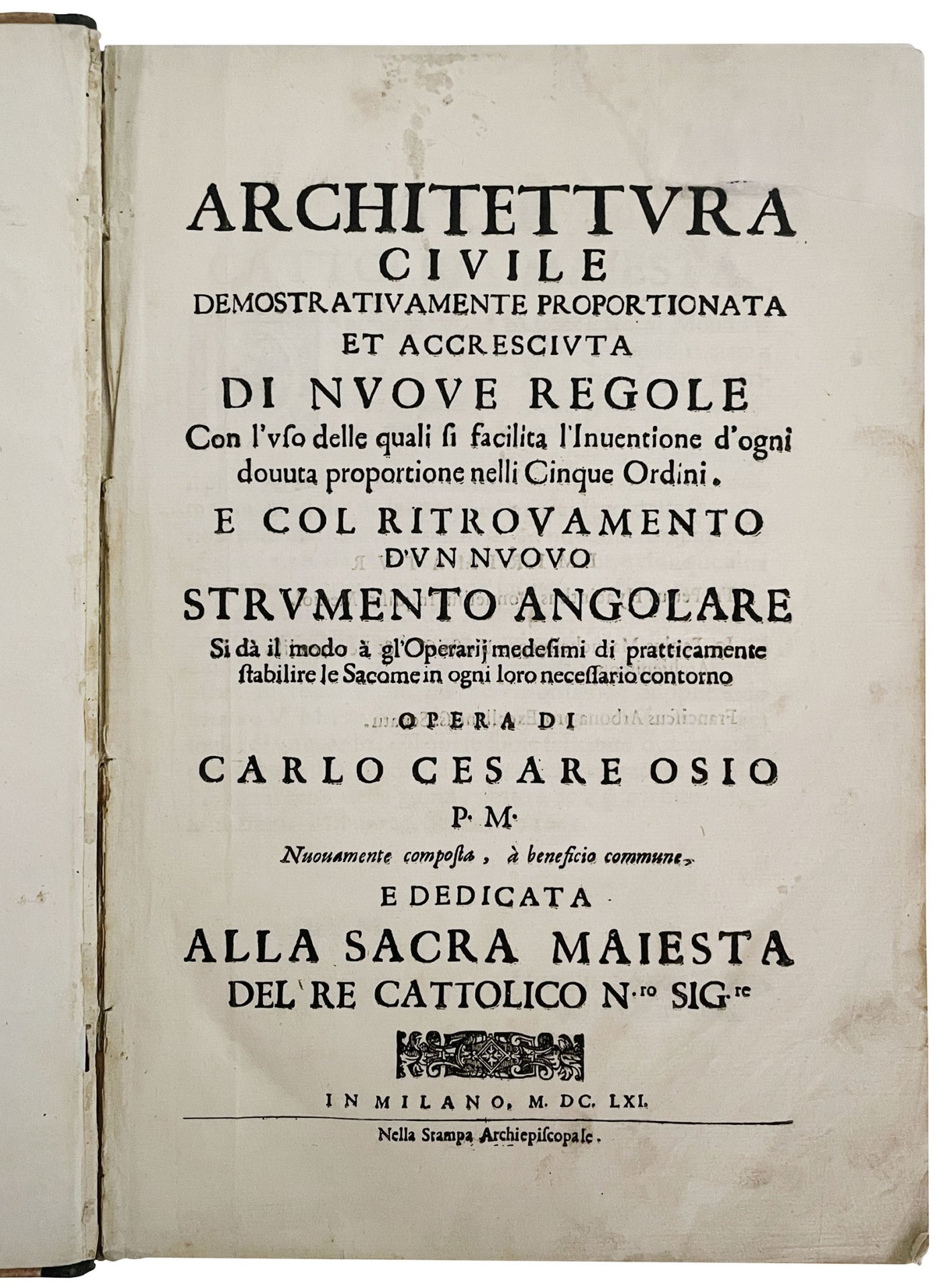
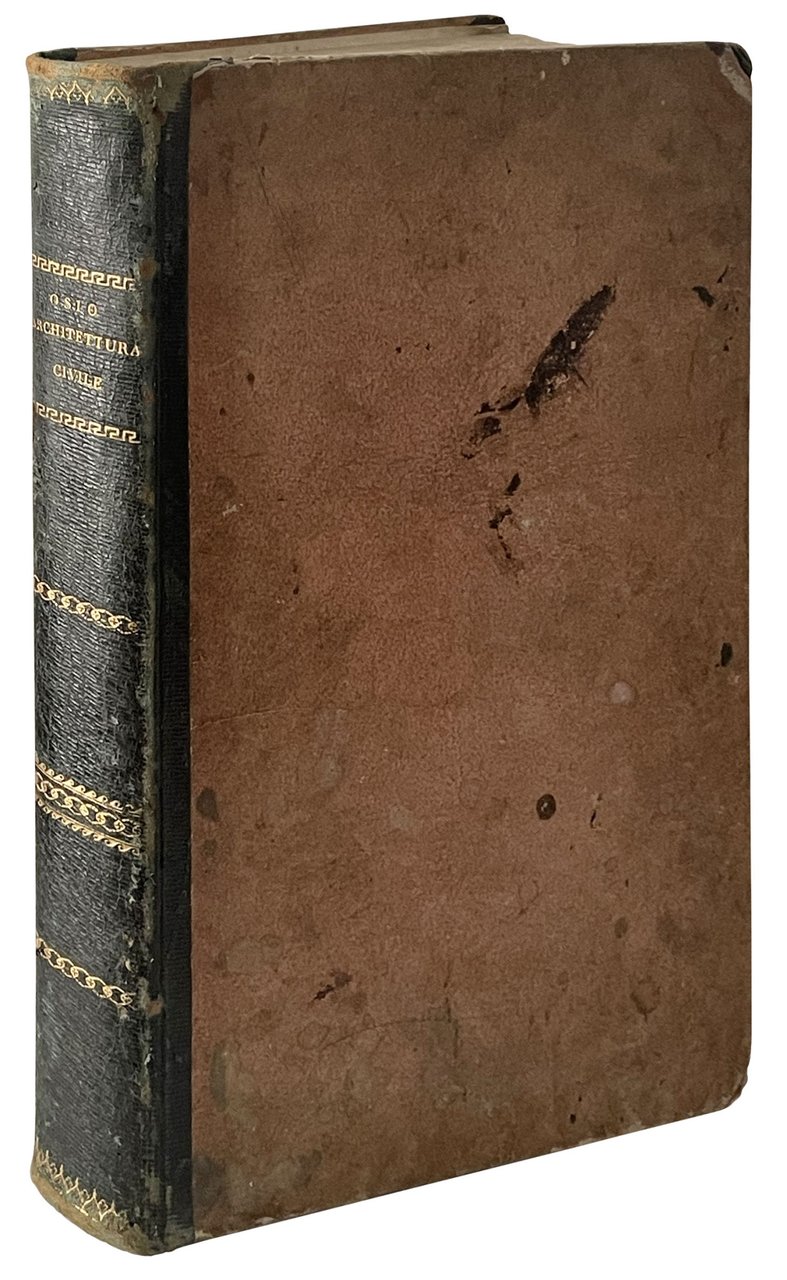
Architettura civile demostrativamente proportionata et accresciuta di nuove regole con l'uso delle quali si facilita l'inventione d'ogni douuta proportione nelli cinque ordini. E col ritrovamento d'un nuovo strumento angolare si da il modo a gl'operarij medesimi di pratticamente stabilire le sacome in ogni loro necessario contorno
Architettura civile demostrativamente proportionata et accresciuta di nuove regole con l'uso delle quali si facilita l'inventione d'ogni douuta proportione nelli cinque ordini. E col ritrovamento d'un nuovo strumento angolare si da il modo a gl'operarij medesimi di pratticamente stabilire le sacome in ogni loro necessario contorno | Libri antichi e moderni | OSIO, Carlo Cesare (1612-?)
Metodi di Pagamento
- PayPal
- Carta di Credito
- Bonifico Bancario
- Pubblica amministrazione
- Carta del Docente
Dettagli
- Anno di pubblicazione
- 1661
- Luogo di stampa
- Milano
- Autore
- OSIO, Carlo Cesare (1612-?)
- Editori
- Nella Stampa archiepiscopale
- Soggetto
- Miscellanea di opere minori
- Stato di conservazione
- Buono
- Lingue
- Italiano
- Legatura
- Rilegato
- Condizioni
- Usato
Descrizione
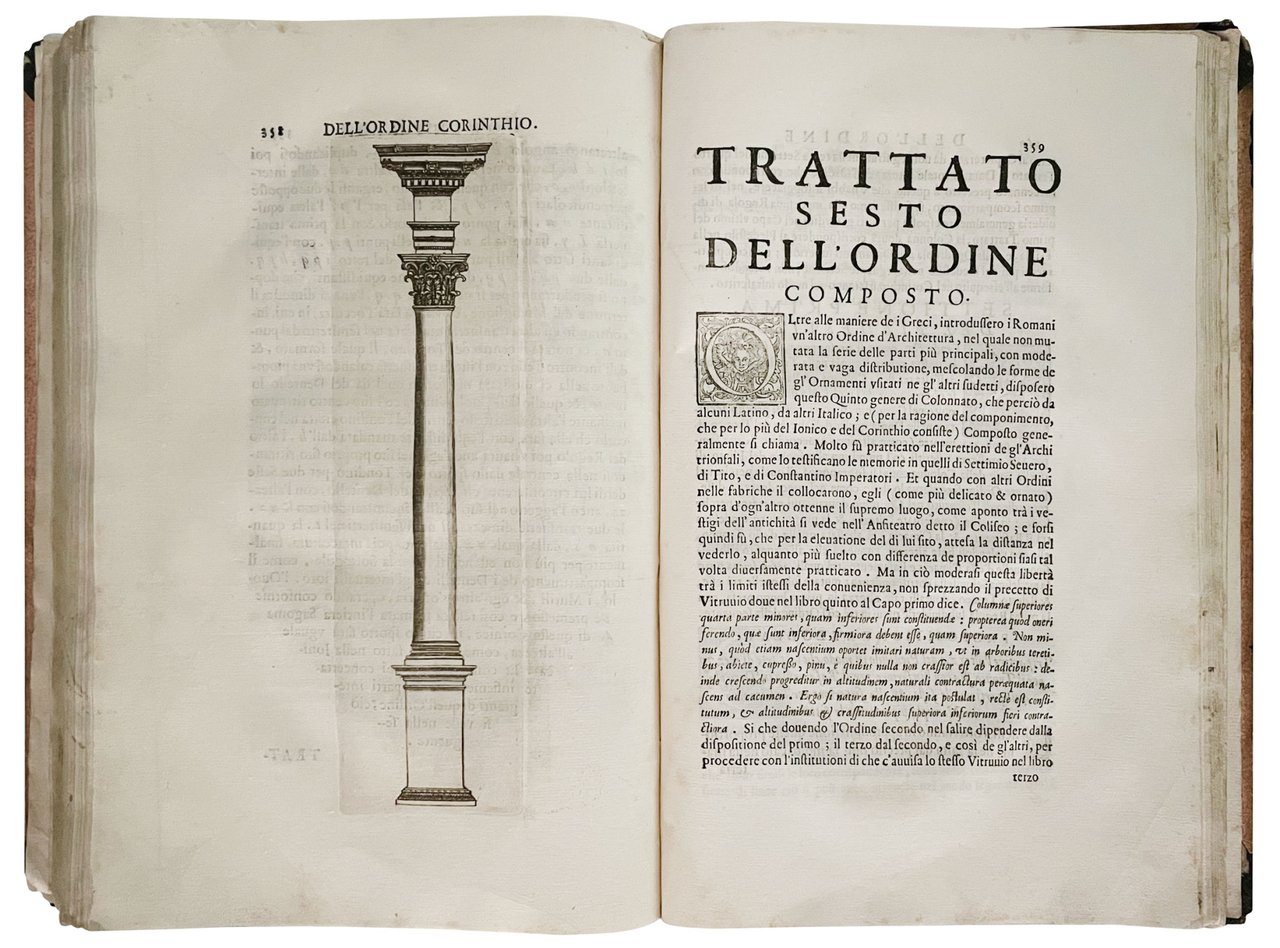
Folio (335 x 220 mm). [10 of 12], 406, [6] pp. Collation: +⁶ A-Z⁴ Aa-Zz⁴ Aaa-Ddd⁴ Eee⁶. Lacking the engraved frontispiece and the author's portrait engraved by Giovan Battista Bonacina from a drawing of Cesare Fiori. With numerous woodcut images of geometric elements and architectural orders in the text. The illustration of a column on p. 406 is engraved. 19th century half green morocco, gilt title and decorations on spine (worn, rubbed and soiled). Bookblock almost fully detached from the binding. Outer upper corner of the title page restored with no loss of text, tear to l. +6, some marginal staining and foxing.
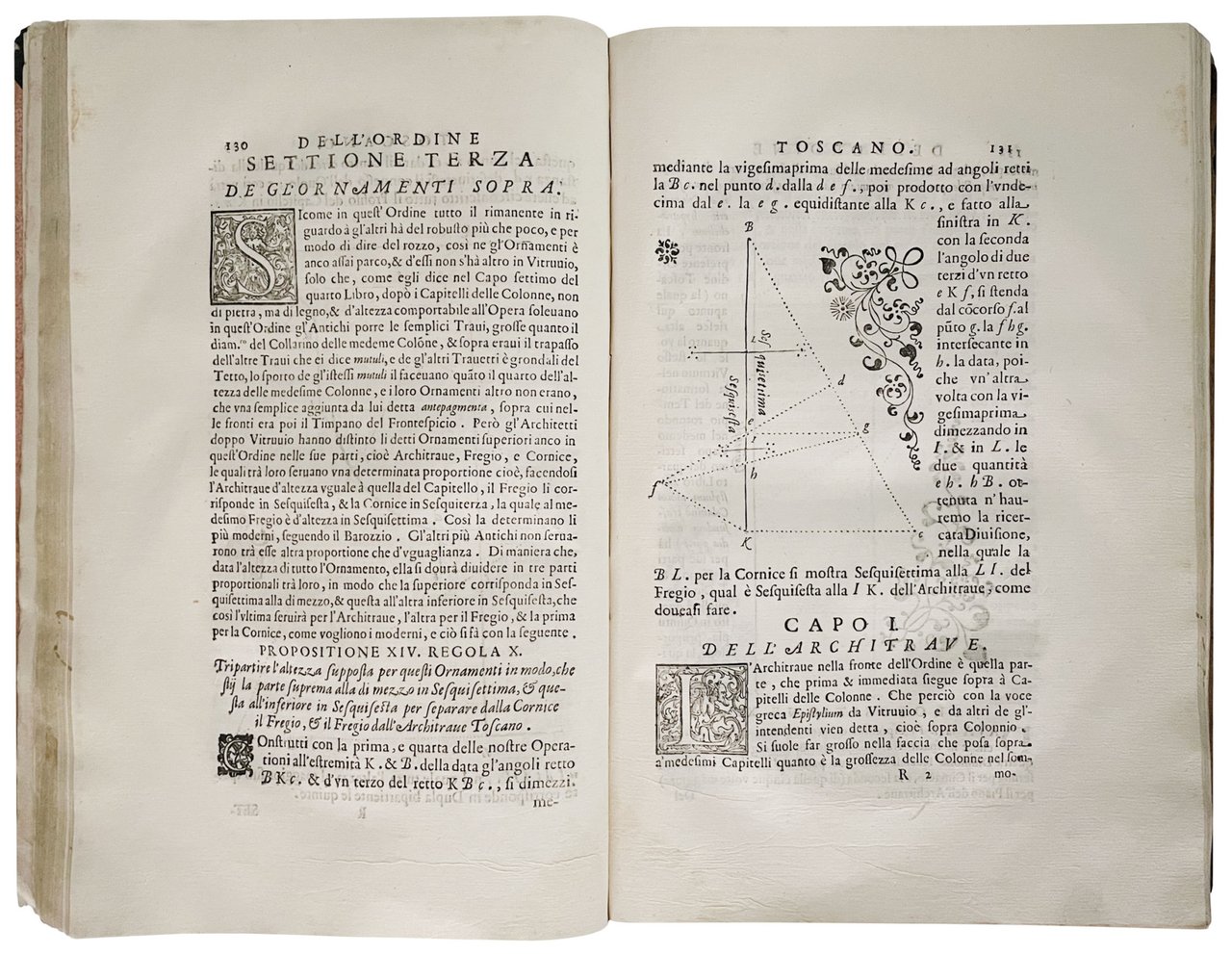
Created during the intense artistic and scientific renewal of seventeenth-century Lombardy, this manual was intended by Osio to bridge the gap between rigorous Euclidean geometry and the practical, everyday needs of stonecutters, masons and site directors. The 'new rules' (nuove regole) promised in the title refer to Osio's unique mathematical instruments and calculations, which were designed to make the design of standard classical architectural orders simpler. Most notably, the treatise introduces and explains the use of a newly invented angular drafting instrument (nuovo strumento angolare). This tool enabled craftsmen on construction sites to accurately plot, scale and transfer complex moulding contours without requiring an advanced mathematical education, thus making sophisticated architectural design more accessible. The narrative is strictly structured around the proportional analysis of the five classical orders: Tuscan, Doric, Ionic, Corinthian and Composite. Rather than relying on classical dogma or aesthetic hand-waving, Osio meticulously deconstructs each order through geometric demonstrations. The book's layout features intricate diagrams in which blank geometric spaces are uniquely filled with typographical ornaments and arabesques, giving the text a richly Baroque visual texture. The work was so useful that it became a standard reference, prompting reissues and distribution across Europe.
"Tutta l'opera è come divisa in due parti: la prima sino a pag. 80 tratta delle operazioni, e divisioni delle linee rette col compasso aperto a caso: la seconda dalla pag. 81 sino al fine contiene sei trattati, ne' quali si parla 1. Dell'ordine architettonico in generale, 2. dell'ordine Toscano, 3. del Dorico, 4. del Jonico, 5. del Corintio, 6. del Composto [...] merita riguardi, e per la dottrina che contiene, e per la rarità degli esemplari, interi specialmente" (Comolli, IV, pp. 3-5)
Italian Union Catalogue, IT\ICCU\UBOE\070238; Riccardi, II, 222; Cicognara, 589; Berlin Katalog, 2619.