Garbage Housing
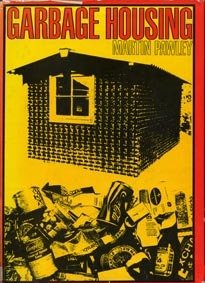
Garbage Housing
Metodi di Pagamento
- PayPal
- Carta di Credito
- Bonifico Bancario
- Pubblica amministrazione
- Carta del Docente
Dettagli
- Anno di pubblicazione
- 1975
- ISBN
- 9780851392400
- Pagine
- 120
- Editori
- Architectural Press, London
- Soggetto
- Architecture
- Descrizione
- rigida
- Lingue
- Italiano
- Legatura
- Rilegato
Descrizione
Industrialized global capitalism has failed to provide affordable housing for everyone. Yet, it is possible to get carbonated soft drinks in aluminum cans into the hands of millions of people worldwide. Martin Pawley looks at this conundrum and rightfully asks how we could let this happen. He demands that we ask more of the consumer goods we make, that we learn from them to address all the problems that our consumer culture has generated. His solution to housing crises is to build dwellings out of garbage – to design our garbage to better accommodate the housing needs of those left out of consumer society’s benefits. This book is captivating. It investigates the use of cast off materials in the slums of Chile. An entire chapter is devoted to the Heineken World Bottle (WOBO). In 1960, Alfred Heineken created the WOBO – interlocking and self-aligning bottles – to hold his well-known beer for Caribbean consumers. Once the bottle was emptied, it could be used to build a shelter. The WOBO demonstrates what Pawley refers to as “secondary use,” that is, everything we design should be made with further uses in mind. — Testi: Pawley Martin. pagg. 120; 82 BN; rileg. rigida. Editore: Architectural Press, London, 1975.
