Extraordinary Popular Delusions and the Madness of Crowds
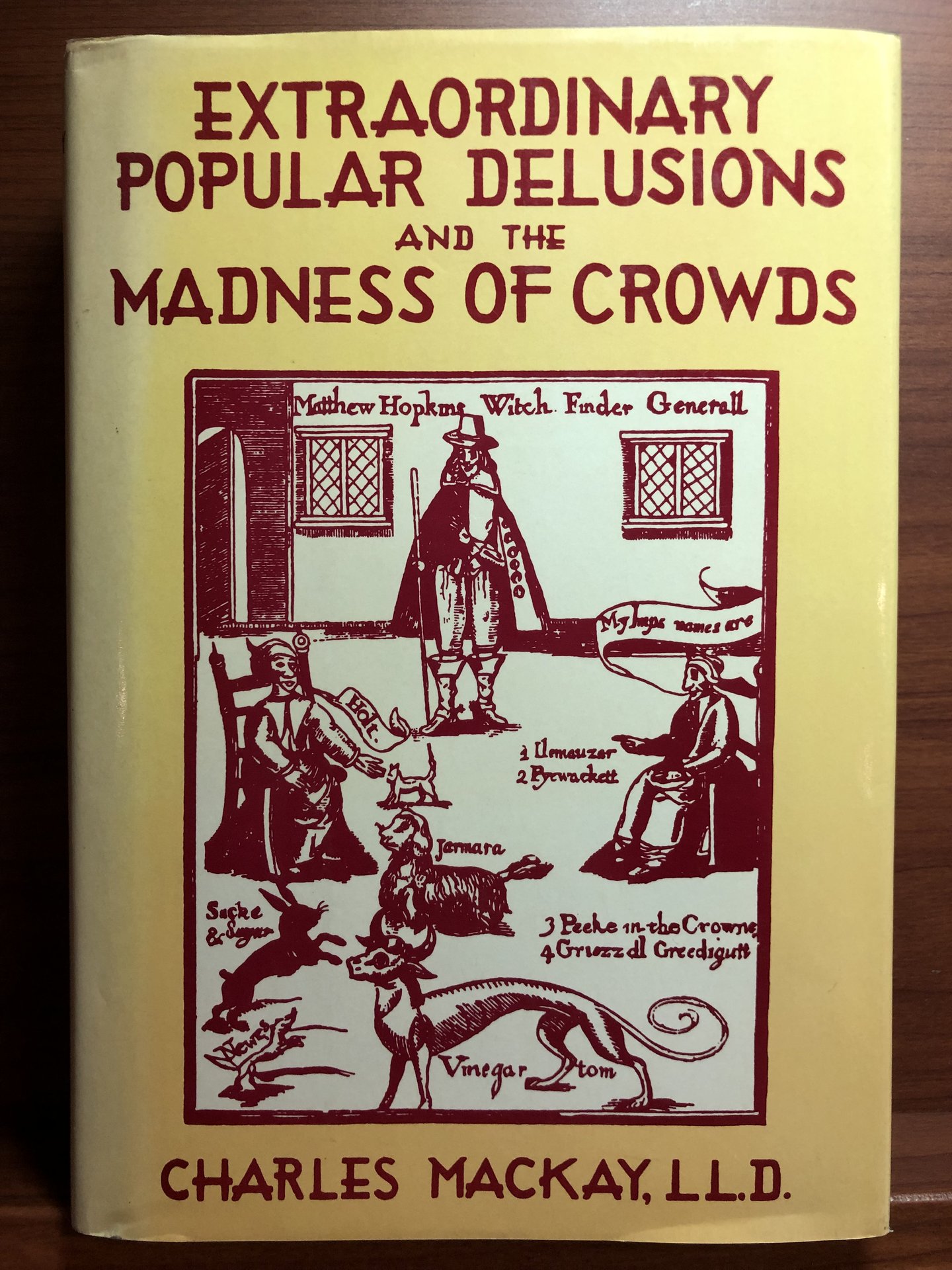
Extraordinary Popular Delusions and the Madness of Crowds
Metodi di Pagamento
- PayPal
- Carta di Credito
- Bonifico Bancario
- Pubblica amministrazione
- Carta del Docente
Dettagli
- Autore
- Mackay Charles
- Editori
- Farrar, Straus & Giroux, 1974 Reprint of London Office of the, National Ilustrated Library 1852 Edition
- Descrizione
- Very Good
- Descrizione
- H
- Sovracoperta
- True
- Stato di conservazione
- Molto buono
- Legatura
- Rilegato
- Copia autografata
- False
- Prima edizione
- False
Descrizione
Octavo, black boards (hardcover), gilt lettering, xxiv + 724 pp. Near Fine in a Near Fine dust jacket With facsimile title pages and reproductions of original illustrations from the ditions of 1841 and 1852. With a Foreword by Bernard M. Baruch.This landmark study of crowd psychology and mass mania throughout history includes accounts of classic scams, grandscale madnesses and deceptions such as the Mississippi Scheme that swept France in 1720; the South Sea Bubble that ruined thousands in England at the same time; the Tulipmania of Holland, when fortunes were made and lost on single tulip bulbs. Other chapters deal with fads and delusions that often spring from valid ideas or causes -- many of which still have their followers today: Alchemy and the Philosopher's Stone, the Prophecies of Nostradaumus the Coming of Comets and Judgement Day, the Rosecrucians and Astrology. Our past also includes highly consequential movements such as Necromancy, Father Hell and Magnetism, Anthony Mesmer and Mesmerism, the Crusades, the Influence of Politics and Religion on the Hair and Beard, Sorcery and the Burning of Witches, the Traffic in Relics, the Popularity of Murder by Slow Poisoning and the Hero-Worship of Common Thieves. Bernard Baruch wrote: "I have always thought that if in 1929 we had all continuously repeated 'two an two still make four,' much of the evil might have been averted." Time and again we can avoid disastrous pitfalls and learn to profit by seeing the ways that history repeats itself.
