Contemporary Jewellery - The Padua School - Gioielleria Contemporanea - La Scuola di Padova
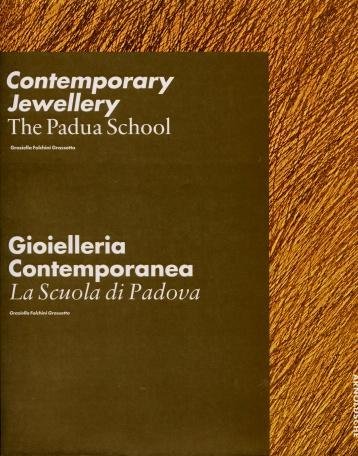
Contemporary Jewellery - The Padua School - Gioielleria Contemporanea - La Scuola di Padova
Metodi di Pagamento
- PayPal
- Carta di Credito
- Bonifico Bancario
- Pubblica amministrazione
- Carta del Docente
Dettagli
- Anno di pubblicazione
- 2005
- Autore
- Folchini Grassetto
- Editori
- Arnoldsche
- Soggetto
- preziosi - gioielli, ornamenti da indossare - moderni e contemporanei
- Lingue
- Italiano
Descrizione
1 lingua: multi - italiano, inglese Legat. edit. rigida con sovrac. illustrata, cm 28x24, pag. 167, con 154 illustraz. a colori - A cura di Graziella Folchini Grassetto - Text in English and Italian - 'The Padua School' designates a contemporary experimental approach to the goldsmith's art which originated in the mid 20th century at the 'Pietro Selvatico' state Institute of Art in Padua - The distinctive features of this jewelry are the use of gold reminiscent of the goldsmith's art in antiquity and a modern and abstract formal expression within the group. Mario Pinton, who brought the goldsmith movement international recognition and acclaim in the 1950s and '60s, is credited with founding the experimental goldsmith movement in Padua. Francesco Pavan has enlarged the scope of the Padua School with his kinetic and geometric formal idiom. The breakthrough on the international jewelry scene took place in the late 1960s with Giampaolo Babetto, under whose support the geometric and Minimalist tendency was most pronounced. Other distinguished artists in jewelry such as Graziano Visintin, Renzo Pasquale, Annamaria Zanella, Stefano Marchetti and Giovanni Corvaya continued along these lines or went their own highly individual ways by experimenting with the use of new materials including plastic - Perfetto stato.
